
‘No salary, no clarity’: LLB, LLM graduates face years of unpaid law internships, zero cases; women worse off
K. Nitika Shivani | February 5, 2026 | 11:47 AM IST | 8 mins read
Unpaid ‘donkey work’ during law internships, lack of guidance, quiet sexism, legal aid workload hit young lawyers’ early careers; women blocked from arguing cases
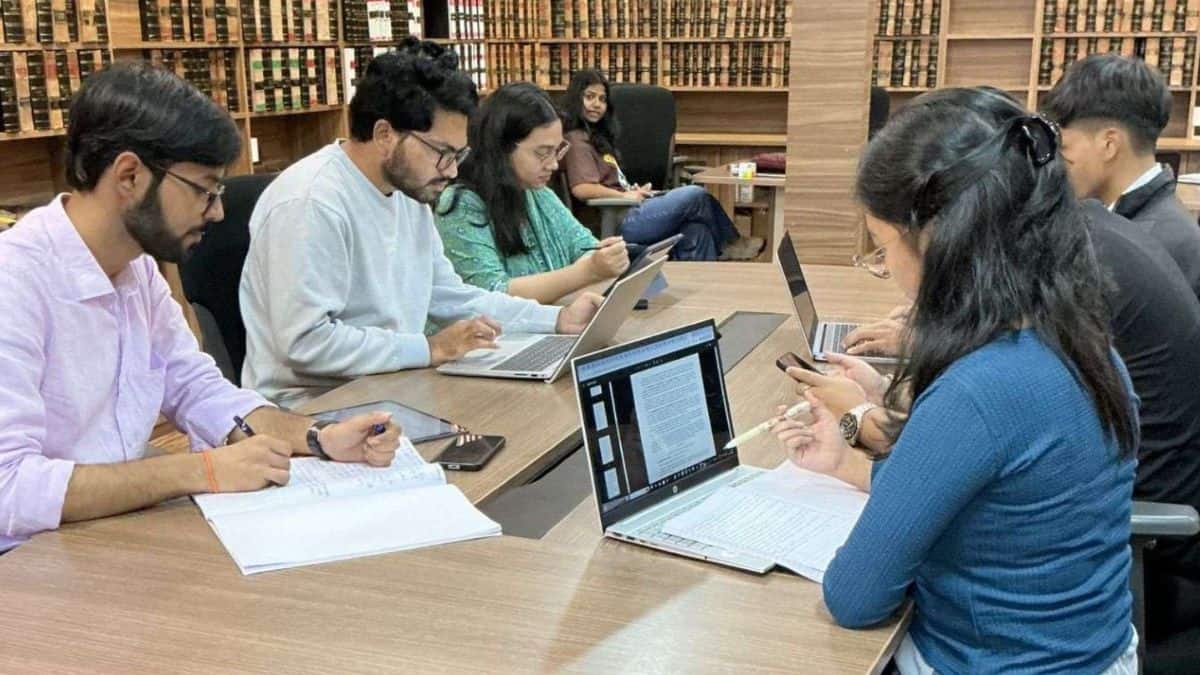
Ridha Joshi arrived early at the Patiala House Courts complex, her case file tucked under her arm. It was her first case since enrolling as an advocate, and she had spent the night before preparing, reading through the brief again and again.
Before the case could be called, a senior male lawyer approached her, she said. He looked through the papers and told her she was not experienced enough to argue the matter. The brief was taken from her and handed to someone else.
“There was no discussion,” Joshi recalled of the 2021 case. “No one asked what I had prepared or whether I was ready. I was just told I did not have experience. Once that is said, you have no space to speak.”
She stayed in the courtroom as the case went on without her. “I was holding the same file I had worked on,” she said. “That is when you really start asking how anyone becomes experienced if the first chance is taken away.”
Hundreds of new law graduates ask themselves the same question. Junior advocates working on cases in lower courts across the country – Delhi, Karnataka, Tamil Nadu, Maharashtra, Uttar Pradesh – struggle for opportunities to prove themselves. They are asked for experience but rarely given the chance to build it.
The legal aid system gives them a platform but leaves them to navigate it without any guidance. Women lawyers are worse off. Young law graduates describe the transition from law school to legal practice as shaped by hierarchy, unpaid work and limited access to real cases.
Also read Legal jobs boom with riders – master AI, intern longer, practise 3 years for judicial services
Litigation and Lawyers: ‘No clarity’
In Bengaluru’s City Civil Court, Dhrithi Kulnal, a recent graduate trying to enter litigation, said unpaid internships have become unavoidable. “You sit in court the whole day, draft applications, go to the registry, do everything you are asked to do – basically donkey work,” she said. “But there is no salary and no clarity on whether you will ever be allowed to argue.”
She said survival itself becomes a challenge. “My rent near the court is more than what I earn in a month,” she said. “There are days you spend money just to be present.”
In Hyderabad’s Nampally Courts complex, Nikitha P Jamal said opportunities often depend on having the right contacts. “These are real cases involving real people,” she said. “To work under a good mentor, you need to be very close to them. If you are not part of that group, you just sit at the back.” But most first-generation lawyers don’t come with those connections. “If your parents are not lawyers, you don’t know whom to approach or what the unwritten rules are,” she said. “You are expected to just figure it out.”
Rohit Kumar, a junior advocate enrolled in 2022 and working in Gaya District Court, Bihar, echoed her. “If you don’t know a senior or have family in the profession, you wait,” he said. “Sometimes for years.” Most juniors spend their days observing proceedings without being heard. “You attend court every day,” Kumar said. “But attending is not practising.”
Another graduate in Bengaluru, Karzil Jawad, agreed. “You don’t get work unless you are close to a senior or recommended by someone inside the circle,” she said. “These are real cases. No one wants to risk them on a stranger.”
Law Internships: High costs, unpaid service
Families are relied upon for every type of help, from making professional opportunities available to financial support.
A junior advocate practising near Tis Hazari Courts in Delhi explained why. “Court fees, travel, printing, robes, bar registration — none of this is cheap,” he said. “If your family cannot support you for two or three years, you are forced to leave, even if you love litigation.”
In Mumbai’s Bandra court complex, Amira A, a junior advocate echoed him, saying many survive only because of parental support. “People don’t say it openly,” she said. “But most juniors who stay have financial backing. Those who don’t slowly disappear.”
Unpaid or low-pay internships are a part of the problem. “Internships after graduation are unpaid or barely paid,” said Sthuthi Manas, a recent graduate from Karnataka. “You are told exposure is payment, but exposure does not pay rent.”
LLB, LLM Courses: Marks don’t make one ready for court
Senior advocates say the problem is not intelligence, but training. Harini Shesha and her daughter, both advocates in Chennai, agree that marks do not get them cases but stronger skills like listening, talking and convincing with conviction are valued better in courtrooms.
At the Bombay High Court, advocate Garanj Lokpal said juniors approach him with the same request. “They tell me, ‘Sir, I don’t want money. I just want to sit with you in court and see how cases work,’” he said. Part of this has to do with training. Lokpal said law schools focus heavily on theory but neglect courtroom skills.
“In court, you have to listen carefully, track what is happening in real time and respond clearly,” he said. “These are skills. They don’t come from books.”
In Chennai’s George Town courts, a retired advocate said the profession has always tested young lawyers, but access has narrowed. “We waited, carried files and observed seniors for years but we were learning every day. [Now,] they are not given small cases or procedural work. Favouritism decides who is noticed,” he said.
Legal Aid: Opportunity without training
For many young lawyers, legal aid becomes the only practical entry point into litigation, not by choice but by lack of alternatives.
In district courts such as Mandya in Karnataka, junior advocates enrolled with the District Legal Services Authority said legal aid work offers immediate case access but little structured learning. “You are assigned multiple matters at the same time,” a junior advocate said. “There is no senior sitting beside you, no discussion on how to build a case or respond in court.”
The cases themselves are often complex and emotionally demanding. The junior advocate said they regularly involve undertrial prisoners, women facing domestic violence, eviction disputes and family conflicts. “These are not simple matters,” he said. “They involve people who are already vulnerable and expect help.”
Without guidance, young lawyers said they learn by improvising. “You prepare late into the night, you make mistakes, and you correct them the next day,” the advocate said. “There is no system that tells you what you did right or wrong.”
Senior lawyers associated with legal aid services said this gap weakens both training and justice delivery. “Legal aid is supposed to support young lawyers and serve the poor,” a senior advocate said. “Instead, it often becomes a dumping ground for files without mentorship.”
Several junior lawyers said the experience shapes their early years in practice but also pushes many out. “You want to help,” the Mandya-based advocate said. “But when there is no guidance and payments are uncertain, surviving becomes difficult.
In a district court in Tamil Nadu, a senior advocate who has handled several high-profile political cases and is associated with legal aid services said the system is stretched far beyond its capacity.
“Legal aid was meant to do two things,” he said. “Provide access to justice for those who cannot afford lawyers, and train young advocates through supervised work.”
Neither, he said, is happening fully.
According to the advocate, the volume of cases assigned to legal aid lawyers has grown sharply, while guidance has not. “Juniors are handed files and dates,” he said. “There is no time to sit with them, no discussion on facts, strategy or courtroom conduct.”
Litigation: Women in the ‘background’
In ways that aren’t always obvious, women advocates are worse off. The difference in the treatment meted out to them and their male counterparts often shapes their early careers.
Ananya Mehra, a junior advocate in Bengaluru, said opportunities come slower. “You are told to observe, to wait,” she said. “Male juniors are given chances earlier, even when they joined at the same time.”
Advocate Moumita – she doesn’t use a last name – who worked cases for a brief time in Alipore court, Kolkata, and is now in another state, described a similar pattern. “You are asked to draft, to take notes, to manage files,” she said. “Arguing is reserved for someone else.”
A junior woman advocate practising in Bengaluru, who requested anonymity to avoid “professional backlash”, said she is routinely kept off the podium. “I prepare the brief, I know the facts,” she said. “But when the matter is called, a male junior is asked to argue.”
She said the justification is often framed as concern. “They say, ‘Let him argue, it’s a tough judge,’ or ‘You can watch today,’” she said. “But watching does not build confidence.”
Another woman advocate at the Bengaluru City Civil Court said the bias is rarely spoken aloud. “No one says women cannot argue,” she said. “They just assume you are better suited to background work.”
Also read The Bar Council of India problem: Why legal education needs reform at the top
The result, she said, is cumulative. “You lose years of speaking time,” she said. “By the time you are ‘ready’, others already have experience.”
Senior women advocates from Bengaluru said the pattern limits long-term growth. “Courtroom confidence comes from repetition,” said a senior advocate at the Karnataka High Court. “If women are not given those early chances, the gap only widens.”
Several women said the exclusion is subtle enough to be dismissed but constant enough to matter. “It is not one incident,” the Bengaluru-based advocate said. “It is every day.”
For Ridha Joshi, the memory of losing her first case remains a turning point. “It stays with you,” she said. “Not because you don’t know the law, but because you are made to feel you are not ready.”
She said the profession places young lawyers in prolonged uncertainty. “You are told to wait, to observe, to assist,” she said. “No one tells you when you will be trusted and something is so wrong in this endless cycle.”
 Add as a preferred source on google
Follow us for the latest education news on colleges and universities, admission, courses, exams, research, education policies, study abroad and more..
To get in touch, write to us at news@careers360.com.
Next Story
]Student Suicides: ‘Need accountability, not new law; it’s about well-being, not mental health,’ says NTF chief
16 lakh answer National Task Force survey; top engineering, law colleges most reluctant. NTF chief on how teacher vacancies, attendance norms, language barriers, scholarship delays break students
Sheena SachdevaLatest Education News
]Related News
]DU Placements 2026: Applications open for jobs, internships at placement.du.ac.in for UG, PG students
'Sorry papa, I tried': Kanpur scholar dies by suicide; note cites failed attempts to secure government job


