
Nagaland University team turns apple-leaf waste into ‘green’ corrosion inhibitor for copper
Aatif Ammad | January 19, 2026 | 04:30 PM IST | 1 min read
Indo–China study reports up to 96.2% corrosion protection using apple-leaf carbon quantum dots, offering a sustainable alternative to toxic inhibitors.
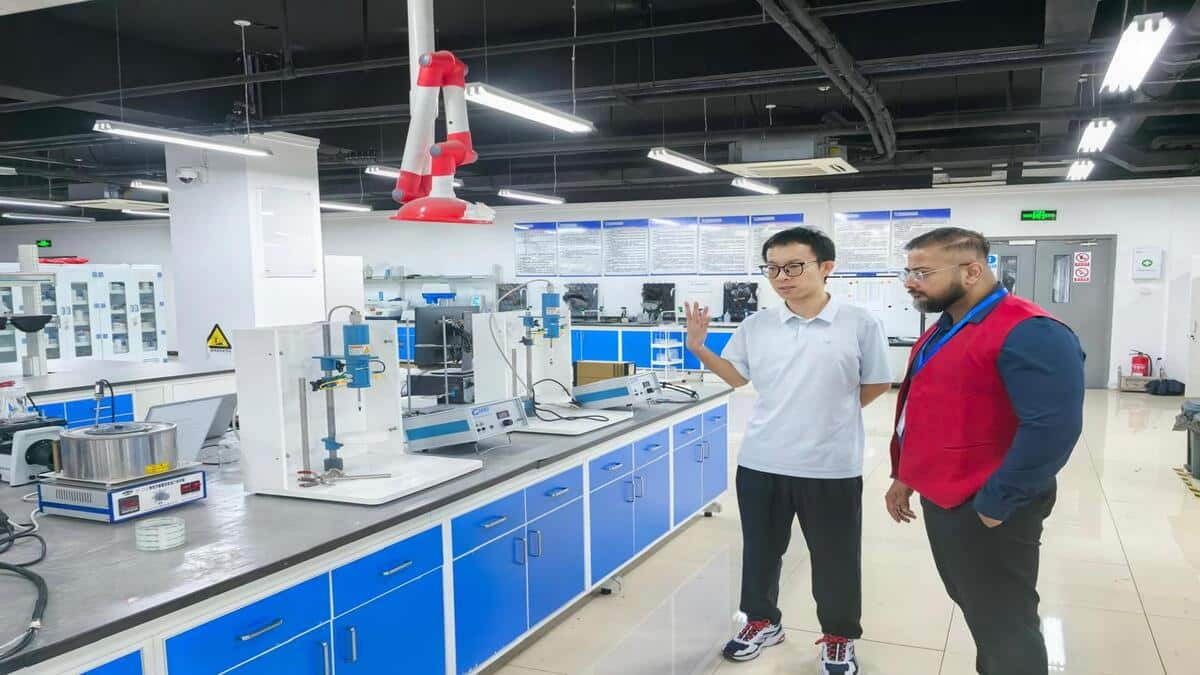
Nagaland University led international research team, in collaboration with the University of Science and Technology Beijing, has reported a sustainable method to protect copper from corrosion using carbon quantum dots derived from discarded apple leaves.
The Indo–China study presents the biomass-based material as a potential alternative to conventional corrosion inhibitors, which are often chemically toxic and widely used across infrastructure and manufacturing sectors.
As per the press release, the newly developed apple-leaf carbon quantum dots (ACDs) showed strong performance in acidic environments, achieving a corrosion inhibition efficiency of 94.0 per cent at low concentrations, improving to 96.2 per cent with longer exposure.
Also read Nagaland University launches teaching, research on Indian Knowledge Systems in chemistry
Apple-leaf waste becomes green corrosion shield
The research was led by Ambrish Singh of Nagaland University and Yujie Qiang of the University of Science and Technology Beijing, and was published in the Journal of Alloys and Compounds.
Congratulating the researchers, Nagaland University Vice-Chancellor Jagadish Kumar Patnaik said the work demonstrates how “apple-leaf waste can be transformed into an eco-friendly corrosion inhibitor,” adding that it reduces dependence on “toxic chemicals.”
Singh said biomass-derived inhibitors could benefit sectors where acidic conditions accelerate corrosion, including oil and gas, chemical processing, power generation and wastewater treatment. “Apple-leaf ACDs could significantly extend the service life of pipelines, storage tanks and industrial equipment,” he said, while reducing health and environmental risks.
Explaining the mechanism, Qiang said the team used a “green hydrothermal process” to convert apple leaves into nanoscale carbon particles doped with sulphur and nitrogen, allowing them to form a stable film on copper surfaces that blocks corrosive ions.
The study also highlights the “waste-to-wealth” potential of agricultural residue, supporting circular economy models, the press release said. The researchers said they will work towards pilot-scale testing and possible integration with existing protective coatings for real-world deployment.
 Add as a preferred source on google
Follow us for the latest education news on colleges and universities, admission, courses, exams, research, education policies, study abroad and more..
To get in touch, write to us at news@careers360.com.
Next Story
]NEET PG 2025 Counselling LIVE: Apply for round 3 choice filling for MD, MS by January 26; news seats, cut-offs
NEET PG Counselling 2025: Candidates can complete the round 3 registration process on the official website, mcc.nic.in, by January 26. Updates on registration, choice filling, cut-offs, seat matrix, medical admissions, and additional information.
SundararajanLatest Education News
]Related News
]NMC asks MBBS colleges to submit annual disclosure report for seat renewal by May 30
DU removes MPT admissions from PG CSAS; AJIPT, PDDUNIPPD to hold joint process from 2026
DU objects to St Stephen’s Principal appointment, cites UGC norm violations


