
NCAHP draft policy curbs state role in allied and healthcare course design; grants power to verify institutes
Musab Qazi | February 4, 2026 | 03:59 PM IST | 4 mins read
NCAHP-proposed structure, similar to NMC’s, will have autonomous boards under state councils that implement central standards, not develop AHP curriculum
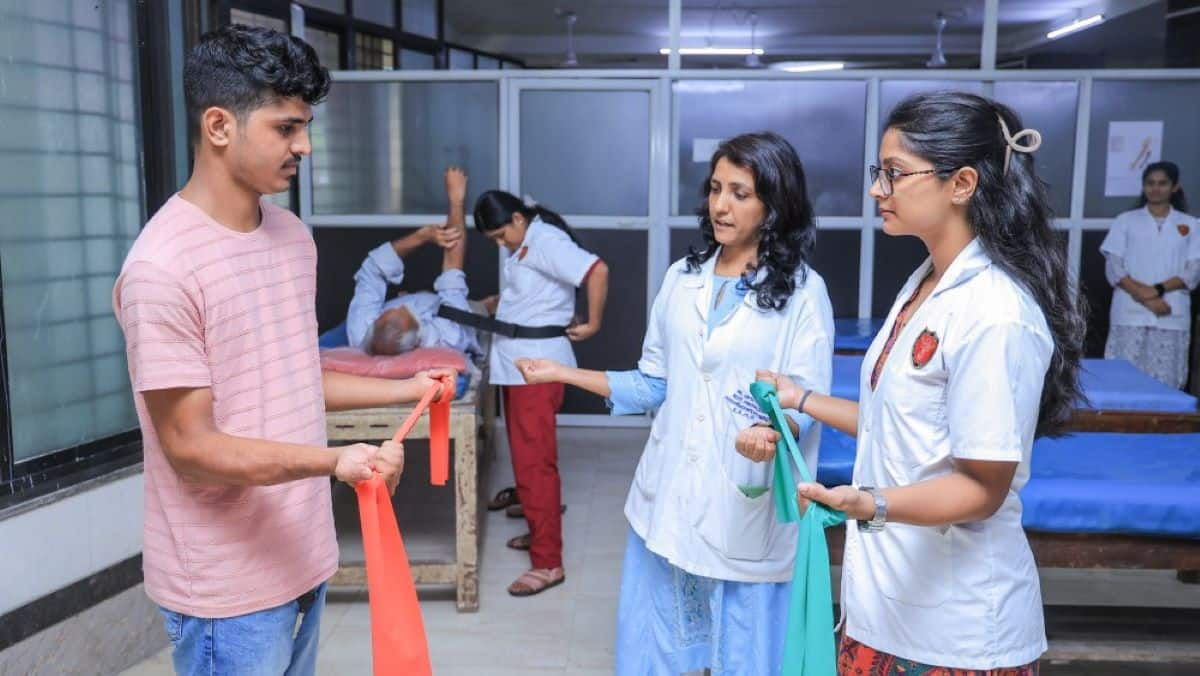
The central government is seeking to have exclusive control over the curricula of allied and healthcare courses – earlier known as “paramedical courses” – and the norms for evaluating educational institutes running these programmes. The states will be assigned the role of enforcing the centre’s standards and, according to a top official, they will also have the powers to approve and register the institutes.
The National Commission for Allied and Healthcare Professions (NCAHP), the apex regulator for the education and practice of allied and healthcare professions, has set in motion the creation of state-level autonomous boards, which will be responsible for implementing common syllabi for AHP programmes, recognising educational institutes and registering qualified professionals, among other functions.
However, despite the law envisaging both policy-making and compliance roles for these bodies, the commission has proposed to restrict some of their powers. NCAHP said that this arrangement ensures uniformity in the norms across the states.
NCAHP Draft Rules: Allied health science framework
Set up a little over a year ago, NCAHP has been spearheading the centre’s efforts to regularise and standardise the largely unregulated allied and healthcare sector – the commission has advocated retiring the term ‘paramedical’ - in the country. It has already issued uniform curricula and admission criteria for around 15 AHP programmes, including physiotherapy, occupational therapy and applied psychology, and has facilitated creation of state-level councils to govern these professions.
NCAHP has outlined the proposed framework in a new set of draft regulations, named Autonomous Boards Regulations. These regulations, which have been released for public feedback, provide for the establishment, constitution, functions and powers of four autonomous bodies – the Undergraduate (UG) Education Board, Postgraduate (PG) Education Board, Assessment and Rating Board and Ethics and Registration Board – that will work under the state councils for AHPs. A Central Assessment Board (CAB) is also sought to be created for the states and union territories without functioning councils.
This mirrors the organisational structure of the National Medical Commission (NMC), the apex body for medical education and profession, which also has four autonomous boards with the same nomenclature and functions. However, while NMC’s bodies work only at central level, NCAHP’s will be created in all the states.
NCAHP control over approval, recognition
However, the draft rules omit some of the functions assigned to these bodies in the underpinning legislation – the NCAHP Act 2021.
For instance, the Act includes “developing” competency based dynamic curriculum content and among the tasks entrusted to UG and PG boards. However, the proposed document replaces the curriculum development with “implementation”, while qualifying this responsibility with “as the commission may specify” rider.
Similarly, some of the language defining the functions of Assessment and Rating Boards under the law, including “determining the procedure” for evaluating allied and healthcare institutions, “granting permission” for establishment of new institutions and seat capacity and recommending the withdrawal of recognition, has been altered. The role of these bodies, in the proposed statutes, has been described as to “evaluate and verify” the institutions’ applications for recognition.
To be sure, the NCAHP Act enlists educational standards among the functions of both the commission as well as the state autonomous bodies. The state councils and the Assessment Boards, though, have exclusive provinces over approval and recognition of courses in the law.
However, Yagna Shukla, NCAHP chairperson, insists that there has been no infringement on the state councils’ power to approve, register, verify and inspect the educational institutions. The commission has no role in these areas, except in the union territories and the states without functioning councils, she said.
Shukla also asserted that the proposed regulations comply with the NCAHP Act and are legally sound. “The Act is very complex. Despite that, the work has been done with very good intention of bringing uniformity, not to cut anyone’s power. Otherwise, there will be conflicts,” she explained.
Also read Allied health sciences have millions of jobs but ‘go unnoticed’ in craze for MBBS
NCAHP, NMC governance
The professional educational institutes in the country follow a variety of governance mechanisms. While medical education is largely regulated at the national level, with NMC and its four autonomous boards, determining everything from course structure and curricula to clinical and infrastructural norms to admission and approval processes. Other disciplines, such as engineering, pharmacy and law, have a more decentralised regulatory framework in place.
While there’s no explicit provision for CAB in the NCAHP Act, Shukla said that a central board is necessary to meet the governance needs of the states that are yet to form their professional councils or have dormant ones. She hopes for autonomous bodies to become functional before the next academic year, 2026-27, when the first tranche of common AHP curricula and admission norms will be rolled out.
“Once the public consultation is over, the regulations will be notified in the gazette. After the formation of autonomous bodies, registration of professionals will begin,” she said.
 Add as a preferred source on google
Follow us for the latest education news on colleges and universities, admission, courses, exams, research, education policies, study abroad and more..
To get in touch, write to us at news@careers360.com.
Next Story
]Budget 2026: Higher education outlay up 11%; Rs 200 crore for PM Research Chairs; PM USHA sees 55% cut in RE
Education Budget 2026: Higher ed gets Rs 55,727 crore. Not under edu ministry but new NID, NIPERs, hospitality institute planned. UGC, AICTE, IITs, IIMs NITs, central universities see hikes
Shradha ChettriLatest Education News
]Related News
]Maharashtra resident doctors to go on indefinite strike from Aug 5
Bengal: ISI faculty, students urge Centre not to proceed with proposed Bill without talks
MoSPI tables Indian Statistical Institute Bill as ISI Kolkata teachers, students protest over autonomy concern


