
NCAHP notifies UGC: NEET UG must for physiotherapy, university tests for psychology courses
Musab Qazi | January 10, 2026 | 08:05 PM IST | 6 mins read
NCAHP informs UGC eligibility criteria for 15 allied and healthcare courses; from 2026-27, occupational therapy will also require NEET UG; optometry, radiology, lab science to use Class 12 score for admission
NEET 2026 College Predictor
Predict your MBBS, BDS & AYUSH admission chances with the NEET College Predictor. Get personalized college recommendations based on rank, category & quota.
Try Now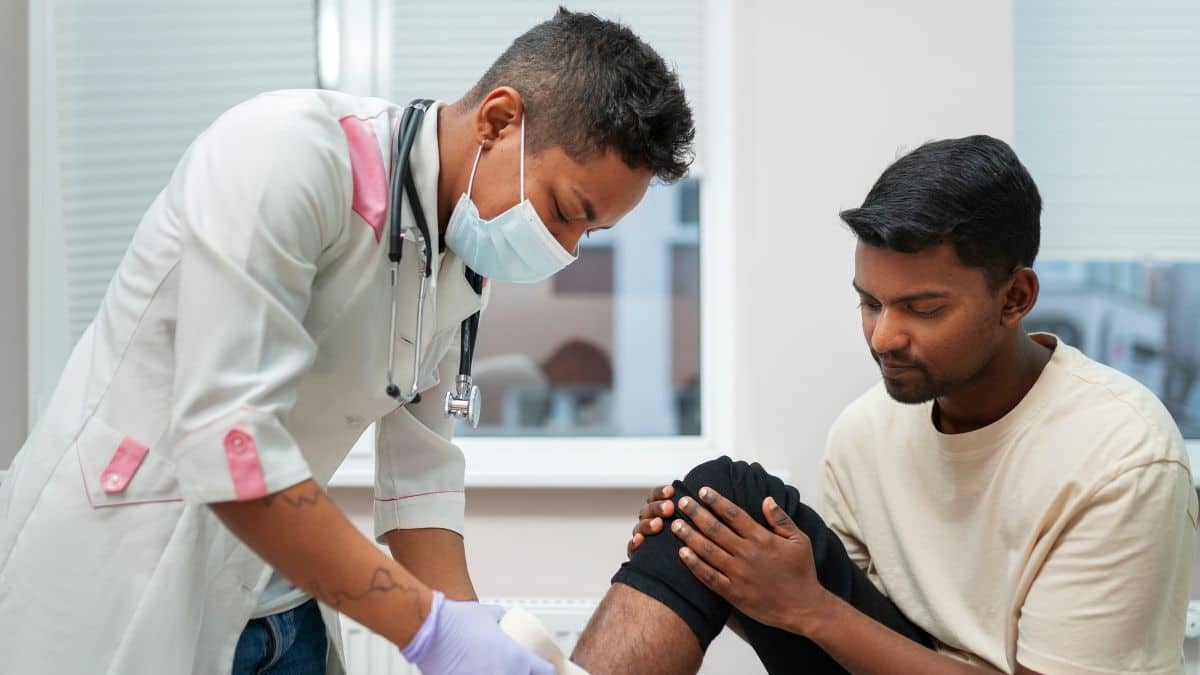
NEET UG Counselling: The physiotherapy and occupational therapy aspirants around the country may have to take the National Eligibility cum Entrance - Undergraduate (NEET UG) exam from the upcoming academic year 2026-27, while those seeking to pursue psychology and medical and psychiatric social work will likely be subjected to an entrance test by the college or university where they intend to enrol.
The National Commission for Allied and Healthcare Professions (NCAHP), the apex body for allied and healthcare professions and education, has sent a letter to the University Grants Commission (UGC), detailing the new uniform admission criteria for 15 allied and healthcare programmes (AHP). The commission has requested the higher education regulator to ensure that all the universities under its purview adhere to the listed eligibility requirements and the admission process from 2026-27.
These admission guidelines mark a significant step in the direction of standardising and regulating AHPs – commonly called ‘paramedical’ courses, but NCAHP has prohibited the use of this term. However, these norms will only be applicable if and when the state governments, their councils for respective AHPs and the varsities adopt them.
The standardisation efforts are being spearheaded by NCAHP, which was established by the central government in 2021 to regulate and maintain the standards of education and services provided by allied and healthcare professionals across India. The commission is tasked with overseeing 56 allied health sciences across 10 broad categories. However, it was only in 2024 that the body was formally constituted.
Also read Allied health sciences, paramedical courses plagued by fake ‘councils’ running across states
NEET UG for BPT, BOT; university tests for BPsy, BMPSW
As its initial work, NCAHP has focused on establishing state-level councils for AHPs, which would be key to implementing the commission’s guidelines. The commission has also released 17 uniform competency-based curricula for 17 programmes, covering 28 professions under its ambit. It’s, however, yet to put in place a centralised mechanism to recognise and affiliate courses and institutes.
While NCAHP has prescribed NEET as the gateway for two healthcare programmes – Bachelor of Physiotherapy (BPT) and Bachelor of Occupational Therapy (BOT) – and university-level tests for Bachelor of Psychology (BPsy) and Bachelor of Medical and Psychiatric Social Work (BMPSW) as the gateway to admission, the enrollment to other programmes are to be carried on the basis of the candidates’ Class 12 scores.
Except for BPsy and BMPSW, all the courses will require the aspirants to have studied physics, chemistry and biology – or mathematics in some cases. Physiotherapy, optometry and occupational therapy also have 50% aggregate score in the three subjects – 40% for reserved category students – as one of the eligibility criteria for admission.
The students also need to have studied and passed English in Class 12 for four programmes – BPT, BOT, Bachelor of Nutrition and Dietetics (Hons) and Bachelor of Science in Health Information Management (BSc HIM).
NCAHP criteria to UGC: Medical courses, eligibility, admission
Course | Eligibility Criteria | Admission path |
Bachelor of Physiotherapy (BPT) | 10+2 with Physics, Chemistry and Biology; Minimum 50% aggregate score and with English pass; NEET appeared but no minimum marks required | NEET score |
Bachelor of Occupational Therapy (BOT) | 10+2 with Physics, Chemistry and Biology; Minimum 50% aggregate score and with English pass; NEET appeared but no minimum marks required | NEET score |
Bachelor of Psychology (BPsy) | 10+2 in Arts/Science/Psychology; Minimum 50% aggregate score | University/institute entrance test score |
Bachelor of Medical and Psychiatric Social Work (BMPSW) | 10 +2 in any stream | University/institute entrance test score |
Bachelor of Optometry (BOptom) | 10+2 with Physics, Chemistry and Biology/Mathematics; Minimum 50% aggregate score | Class 12 score |
Bachelor of Medical Laboratory Science (BMLS) | 10+2 with Physics, Chemistry and Biology | Class 12 score |
Bachelor of Emergency Medical Technologist (BEMT) | 10+2 with Physics, Chemistry and Biology | Class 12 score |
Bachelor of Anaesthesia and Operation Theatre Technology (BAOTT) | 10+2 with Physics, Chemistry and Biology/Mathematics | Class 12 score |
Bachelor of Nutrition and Dietetics (Hons) | 10+2 with Physics, Chemistry and Biology; Minimum 50% aggregate and with English pass | Class 12 score |
Bachelor of Medical Radiology and Imaging Technology (BMRIT) | 10+2 with Physics, Chemistry and Biology | Class 12 score |
Bacheor of Radio Therapy and Technology (BRTT) | 10+2 with Physics, Chemistry and Biology | Class 12 score |
Bachelor of Physician Associates (BPA) | 10+2 with Physics, Chemistry and Biology | Class 12 score |
Bachelor of Dialysis Therapy Technology (BDTT) | 10+2 with Physics, Chemistry and Biology | Class 12 score |
Bachelor of Respiratory Technology (BRT) | 10+2 with Physics, Chemistry and Biology | Class 12 score |
Bachelor of Science in Health Information Management (BSc HIM) | 10+2 in Arts/Science/Commerce with English as a mandatory subject; 50% aggregate score | University/institute entrance test score |
Yagna Shukla, NCAHP chairperson, explained that since psychology and medical psychiatry programmes are open to students from different streams, there needs to be a common test to evaluate them.
“It will be the responsibility of state councils to carry out the admission process as prescribed. We are in constant communication with them. Some, like those in Karnataka, Maharashtra, Tamil Nadu and Gujarat, have already agreed to abide by the common standards,” she said.
Also read ‘TGMC Autonomy Undermined’: Doctors protest Telangana bid to pack medical council with bureaucrats
Psychology Courses: The grey area
However, the question of how psychology programmes will be governed remains to be resolved. Currently, except for clinical psychology programmes, which are regulated to some extent by the Rehabilitation Council of India (RCI) under the Union Ministry of Social Justice and Empowerment, there’s no singular standard-setting body for psychology in the country.
One of the broad categories under NCAHP’s province is ‘community care, behavioural health sciences and other professionals’. It includes 15 professions, such as ‘psychologist’, ‘behavioural analysis’, ‘integrated behaviour health counsellor’, and ‘mental health support workers’ – fields which largely cover the existing psychology courses.
Shukla said while clinical psychology courses will continue to be looked after by RCI, the commission aims to bring all ‘applied psychology’ programmes under its ambit “to the extent possible”.
It has suggested a UG course called ‘BPsy’, which would cover applied psychology and behavioural sciences, while the master's curriculum is still under development. A different programme – BMPSW – has been prescribed to train students in both medical social work and psychiatric social work. The students will be able to specialise in one of these fields at the PG level. "This is being done for the first time, leading to uniformity and standardisation," said Shukla.
Setting common standards for the existing psychology programmes, however, will be a challenge, as there is considerable variation in both the content and nomenclature of psychology courses offered by both humanities and science faculties. The commission, however, isn’t very keen on regulating the psychology programmes within the humanities’ domain. “The experts have opined that the BA Psychology course teaches only part of the psychology profession,” said Shukla.
Also read UGC ban on psychology degrees in distance-education mode leaves 1.3 lakh students in limbo
The NCAHP’s desire to professionalise and standardise psychology programmes has already caused some chaos last year, when UGC, at the behest of the commission, announced the discontinuation of distance-learning programmes in psychology. Those who did BA, MA, BSc and MSc Psychology programmes in online and distance learning (ODL) mode as well as the students currently enrolled in them are anxious about the validity and utility of their courses.
Shukla said that the ODL courses in psychology will continue to be banned. She suggested that while the varsities will have the option of keeping their regular courses out of NCAHP’s ambit, the psychology graduates will only be permitted to register as psychologists and do clinical practice if their programmes are recoginsed by the commission.
NCAHP, however, plans to provide ‘provisional registrations’ for psychology and other AHP graduates if their courses don’t meet the standards of the commission’s common curricula. They will have to undergo a ‘bridge course’ at one of the recognised institutes to cover the deficit and be granted the license to pratices their respective professions. “We will soon issue the norms and conditions for provisional registrations,” said Shukla.
 Add as a preferred source on google
Follow us for the latest education news on colleges and universities, admission, courses, exams, research, education policies, study abroad and more..
To get in touch, write to us at news@careers360.com.
Next Story
]Dual-track MTech, ‘product Phds’: IITs plan large-scale PG, research revamp
All IITs set to redesign MTech courses after IIT Hyderabad-led review finds interest shrinking; education ministry plans Prime Minister Research Chair scheme; IIT Bombay will design a leadership training programme
Sheena SachdevaLatest Education News
]Related News
]UPTET Result 2026 LIVE: UP Teacher Eligibility Test scorecard soon at upessc.up.gov.in; qualifying marks
ICMAI CMA June Result 2026 LIVE: Inter, Final results tomorrow at icmai.in; pass percentage
UGC NET Answer Key June 2026 LIVE: June exam response sheet soon; login details, challenge fee


