
Audit Before Action: Odisha plans to retire ‘non-performers’; college teachers point at staff, facility gaps
Pritha Roy Choudhury | January 21, 2026 | 04:10 PM IST | 5 mins read
Odisha government has asked colleges to list ‘non-performing’ teachers by January-end for early retirement. Associations say this punishes teachers for funding, infra, staffing gaps
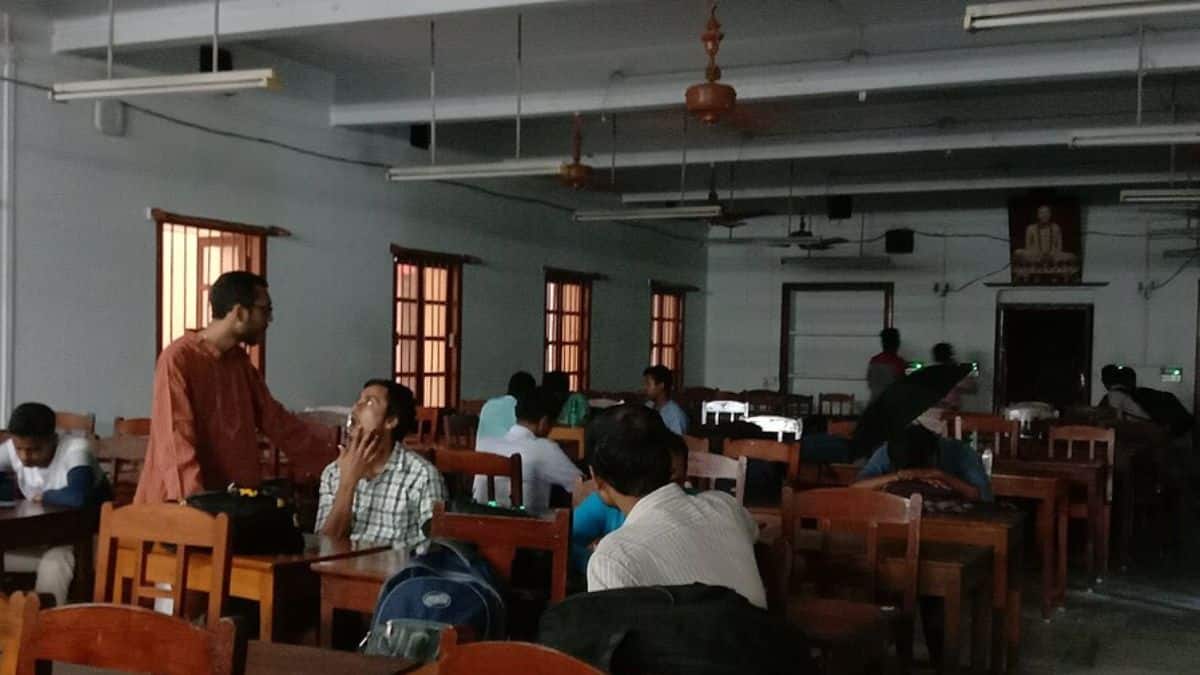
The Odisha Government’s directive to colleges to identify and submit the names of “non-performing” teachers by January 31 has drawn sharp reactions from teachers and their representative bodies across the state. The higher education department has said the alleged non-performers will be forced into early retirement.
While the government says the move is aimed at improving academic standards and accountability, teachers say that the absence of uniform and transparent evaluation mechanisms, infrastructural disparities across institutions and the short timeline could lead to arbitrary decisions.
Odisha universities and colleges do have a confidential and annual appraisal system on the basis of which promotions are decided. However, teachers say the system is unfair and not transparent.
Also read Teacher recruitment to scholarships: How SC wants universities to prevent student suicides
Odisha: Performance appraisal for teachers
Swapna Sarita Mohapatra, assistant professor of chemistry at Bhadrak Autonomous College and Zonal Secretary (North Odisha) of the Odisha Government College Teachers Association, said that accountability cannot be enforced without prior systems to assess performance.
Odisha universities and colleges have a statutory performance appraisal system that grades teachers according to various criteria, including both academic and ‘extra-curricular’ work. But using that measure to remove teachers would be a mistake, say faculty members.
“The performance appraisal currently passes through multiple levels – the principal, the regional director and the department secretary but lacks transparency,” she explained. “But when there are thousands of faculty members, how will such evaluation be done objectively?” Evaluation of non-academic work is even more complex.“Some faculty members are proactive and take responsibility for sports events or science activities, while others may be introverts. On what basis will these be judged?”
Also read The Bar Council of India problem: Why legal education needs reform at the top
Priya Ranjan Debata, assistant professor at Maharaja Sriram Chandra Bhanja Deo University, has a different take. “There should be voluntary retirement if teachers are not performing,” he said. “We already have a performance appraisal system with different criteria for monitoring performance. If the monitoring system flags negative marks, that can be used for assessment.”
However, Mohapatra and Debata agree that performance is closely tied to the availability of resources – space, research and other facilities, staff. Odisha colleges are short of these and compulsory retirement in these conditions may punish teachers for gaps that lie elsewhere in the system.
Odisha Colleges: Infrastructure, staff shortage
Mohapatra pointed out that infrastructural constraints play a major role in non-performance, especially for colleges in rural areas.
“If you ask me about my college, I may be able to do some work this year, but a lot cannot be done because we don’t have the required instruments for projects or research. We have to depend on other institutions, which is not possible for everyone and this becomes one of the reasons for non-performance,” she said.
Also read Under NTA, UGC NET a 'general knowledge test' – rewards rote learning, not analytical skills
“Another problem is the severe staff shortages,” she continued. “There are very few non-teaching staff and clerical and official work that they are supposed to do falls to the teachers. That also takes away time for teaching and research.”
Debata echoed Mohapatra on the infrastructure gaps, saying they must be addressed before enforcing punitive measures. “We have minimum facilities to conduct research. Many universities and colleges, especially in remote areas, lack adequate facilities. Before issuing such a diktat, the government must ensure that facilities are provided equally across institutions.”
‘Diktat’ without audit
Mohapatra maintains that there has to be a transparent system to assess performance that is sensitive to the complexities of higher education.
“Until now, perhaps there has been no serious initiative to make teachers understand whether they are performing or not. At the very least, they should be warned and given opportunities to improve,” she said. “Without annual academic audits, how can we objectively measure who is performing and who is not? A sudden diktat like this will only create panic.”
From what reports suggest, the government hasn’t clarified how exactly performance is to be measured for the purpose of removing under-performers.
Mohapatra said an audit mechanism must be formally announced and that would make teachers more conscious too. “If they still fail to perform after that, strict action can be taken. There should be a clear time frame of at least one year and proper guidelines should be issued. Every college must adhere to those guidelines.”
Bibhudatta Behera, professor of chemistry and also a member of Odisha Government College Teacher’s Association, had the same stand – non-performance is harmful and must invite action but that action must be fair. “If a teacher is not doing his or her duty, they are not contributing to students or society. In such cases, action should be taken,” he said adding, “Notice should be given to such teachers and they should be allowed some time to improve.” He suggested that feedback from students and parents should also be part of performance tracking.
University administrators are more amenable to the proposal. Sanak Kumar Naik, registrar of Gangadhar Meher University, Sambalpur, said non-performing teachers should not continue in the system. “If they are not competent, they should retire. The government has taken the right step,” he said, adding that accountability measures exist in other departments as well. As for the tight deadline, institutions can make decisions in just 10 days, he said.
Odisha higher education need funds, training
“It is a wrong step, that is all I can say because we are lacking on infrastructure, we are lacking on teachers,” said a professor categorically, but on condition of anonymity. “I think the focus should be more on training and making faculties perform. The real question is not about performance at all but training and infrastructure. That is my take. There is a responsibility of the state also. The state needs to spend more on education because I feel that education has declined in many ways.”
They insisted on improving funding. “Focus on education and healthcare should also be there [while] utilising the corporate social responsibility (CSR) funds in the tribal belt and areas where industrial mining is happening, but that is not the case,” they said. “What is happening is that the funds are reverted back to the capital cities or urban areas.”
Mohapatra agreed, also stressing on regular training for teachers and pointing to the wide disparities between well-equipped urban colleges and under-resourced rural ones.
As per official listings of Odisha’s higher education department, the state has more than 1,000 colleges and around 40 universities, including government, aided, autonomous and private institutions. These colleges are spread across urban centres, rural interiors and tribal-dominated hilly districts, such as Koraput, Rayagada, Kandhamal, Nabarangpur and Mayurbhanj.
 Add as a preferred source on google
Follow us for the latest education news on colleges and universities, admission, courses, exams, research, education policies, study abroad and more..
To get in touch, write to us at news@careers360.com.
Next Story
]IIT Kanpur Suicide: PhD scholar’s death due to lack of accountability, ‘capable’ counsellors, allege students
IIT Kanpur students accuse counsellor of turning away PhD scholar just hours before death; demand institute’s accountability, appointment of mental health experts, better infrastructure
Sheena SachdevaLatest Education News
]Related News
]MCC NEET Counselling 2026 LIVE: Registration for MBBS, BDS AIQ quota seats at mcc.nic.in from tomorrow
Maharashtra Private Medical College Fee Revision: SMBT MBBS fee cut by Rs 81,500, others see hikes
Tamil Nadu CM unveils Rs 274.46 crore higher education infrastructure projects


