
Rice research needs fortification too, say scientists at agriculture universities
Pritha Roy Choudhury | January 31, 2026 | 01:57 PM IST | 5 mins read
Scientists working on wild rice say focus shouldn’t just be on creating hybrids but conserving indigenous varieties. Plus, the three-year funding term is usually too short
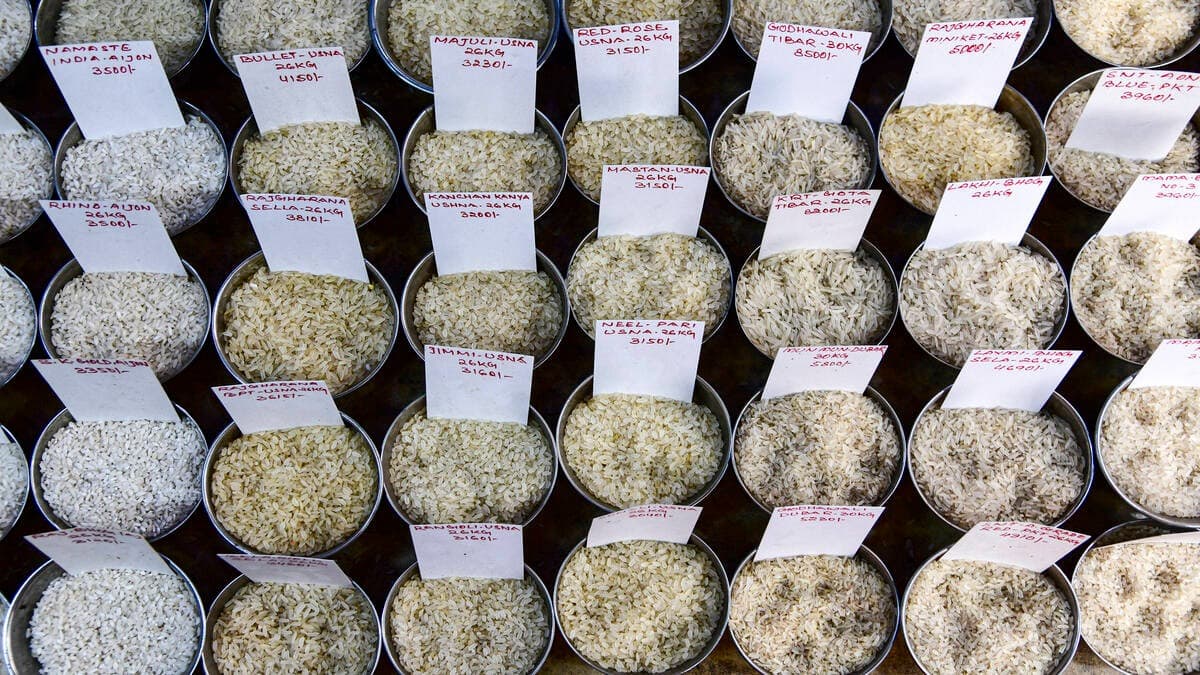
Scientists working on rice wish research bodies and funders would allow them more freedom. It would help them follow their interests and also help rice.
As present, rice research in agriculture universities and other institutions, focuses on identifying useful traits in wild species of rice – such as resistance to diseases, insects, salinity, drought, submergence, low light, unseasonal rainfall – and transferring them into widely-cultivated, farmer-preferred rice varieties.
Given how seminal rice is to India’s food security, rice research is also hugely controlled. Teachers and researchers say one of the biggest challenges they face is lack of freedom for choosing research topics. Funding agencies, including the Department of Biotechnology (DBT), specify where and on what researchers must work.
“If you see recent DBT projects, they ask us to work specifically in the Northeast and tell us crop-wise what research we need to do,” said a researcher on condition of anonymity. “We depend on funding, so we have to agree. We cannot research what we want to.”
Also read ‘Last democratic step’: Why 200 OUAT Bhubaneswar research scholars are on hunger strike
ICAR, agriculture universities
Rice research in India is primarily driven by public research institutions such as the Indian Council of Agricultural Research-Central Rice Research Institute (ICAR-CRRI) in Cuttack, Odisha; Bidhan Chandra Krishi Vishwavidalaya (BCKV) and Uttar Banga Krishi Vishwavidalaya (UBKV) in West Bengal; Punjab Agricultural University; and the Indian Institute of Rice Research, Hyderabad.
At most of these, scientists are being asked to study and create hybrids. Alongside wild rice, indigenous rice varieties are vulnerable now. These varieties are consumed as part of the local food culture. In the Northeastern region of the country, aromatic varieties like Tulaipanji and Tulsi Bhog are well-known.
But indigenous varieties are slowly disappearing from farmers’ fields. “Most of the research funding priorities are largely oriented towards extracting genetic resources from wild indigenous varieties for hybrid development, over the preservation of wild and indigenous germplasm,” said a senior research scientist of a university in West Bengal, on condition of anonymity. “There is no subsidy for indigenous varieties and their yield is less compared to hybrids.”
According to the scientist, the northeastern region and North Bengal have many wild and indigenous rice varieties. “These varieties are being procured and seed banks are being made,” they said.
Mridul Chakraborti, senior scientist, genetics and plant breeding at Central Rice Research Institute, Cuttack, said, scientists work extensively with species like Oryza rufipogon and Oryza nivara, which are genetically closer to cultivated rice and therefore easier to cross, while more distant species such as Oryza coarctata and Oryza officinalis require specialised techniques like embryo rescue.
“Research has already led to the development of improved breeding lines, including submergence-tolerant and disease-resistant versions of popular varieties such as Swarna which is widely cultivated in West Bengal, without altering grain or husk characteristics critical for farmer acceptance,” he added.
Wild rice research funding, timelines
“[Wild rice] is not consumed as food, but it plays a crucial role in rice improvement,” said Bidhan Roy, head of the department of seed science and technology at Uttar Banga Krishi Vishwavidyalaya. Wild rice has 24 identified species, and carries genetic traits that are essential for developing new rice varieties which can withstand disease, pests and changing climate conditions.
Despite its importance, wild rice research faces significant funding and infrastructural challenges. Maintaining wild rice populations itself is difficult, as wild rice exhibits traits such as strong seed shattering, which requires specialised field facilities and careful segregation.
Kutubuddin Mollar, senior scientist at ICAR-CRRI Cuttack, said that the problem arises because projects are typically funded for three years, which is insufficient for long-term breeding work. To maintain wild rice is very tough because they have certain characteristics like the rice or seed splatters – seeds are splattered over a wide area in a burst unlike regular rice where the mature grain stays on the stalk. The splatters make segregating wild rice very tough and for that, a special field facility is required. “And let me tell you wild rice is a gold mine of different traits that we even do not know,” said Mollar.
“This duration (three years) is inadequate for wild rice research which is inherently long-term and cannot be completed within such short timelines,” said another researcher on condition of anonymity. “Once project funding ends, student fellowships are discontinued and resources for essential inputs such as chemicals and field maintenance dry up, leaving promising work incomplete. These constraints are particularly severe in state universities, where talented students and faculty often lack access to adequate research facilities. As a result, many young researchers struggle to sustain meaningful work.” Delayed fellowships and poor infrastructure, especially in state universities, further discourage students.
Also read Dual-track MTech, ‘product Phds’: IITs plan large-scale PG, research revamp
Research by diktat
While scientists take pride in the work and achievements so far, they question the logic behind the restrictive approach. “Research involves exploration and discovery. How can the government or any entity ask us to come up with a new hybrid?” they asked. “We are told to work only in the Northeast, that is in the seven sister states and Sikkim. That clearly shows commercial interests are involved. Northeast was unexplored till now and the funders are tapping in those areas now.”
DBT project proposals for the Northeast also specify certain traditional crops. “Why only these crops?” they asked. “Is it because of the germplasm? Considering the increasing corporate concentration in agriculture and the stranglehold of oligopolies in the seed market, there is a risk of overexploitation of unique genetic resources, transforming indigenous germplasm into corporate capital while marginalising farmers’ seed sovereignty.”
Meanwhile, in the Northeast, researchers from Assam Agriculture University have sent a new proposal to DBT seeking funds for work on wild rice.
Here, wild rice is being protected and studied in wetland areas, its natural habitat. These sites are being used for conservation and research on Oryza rufipogon. Assam Agricultural University (AAU), Jorhat, is working closely with these natural populations to study genetic traits linked to disease resistance and tolerance to flooding.
“There is a conservation facility here in AAU and we have been conserving more than 2,500 local land races. We are working on some land races for further improvement. Students are working on wild rice and our scientists are going to submit a new proposal for funding to DBT on wild rice as well. We are expecting good results,” said Sanjay Chetia, director, research (Agri), AAU.
 Add as a preferred source on google
Follow us for the latest education news on colleges and universities, admission, courses, exams, research, education policies, study abroad and more..
To get in touch, write to us at news@careers360.com.
Next Story
]Economic Survey 2026: Make India ‘education tourism’ hub; offer international students Ayurveda, yoga courses
Economic Survey 2025-26: India hosts just 49,000 international students against lakhs going abroad, calls for reforms in visa, housing, dual degrees; warns market forces may exclude marginalised
Shradha Chettri


