
Samagra Shiksha Abhiyan: Centre, states mull outcome-based school funding, spark ‘teaching to test’ fears
Musab Qazi | January 14, 2026 | 04:51 PM IST | 7 mins read
Education ministry, state officials also discussed private funds, integrating NEP and SSA goals. Educationists warn against overriding RTE Act
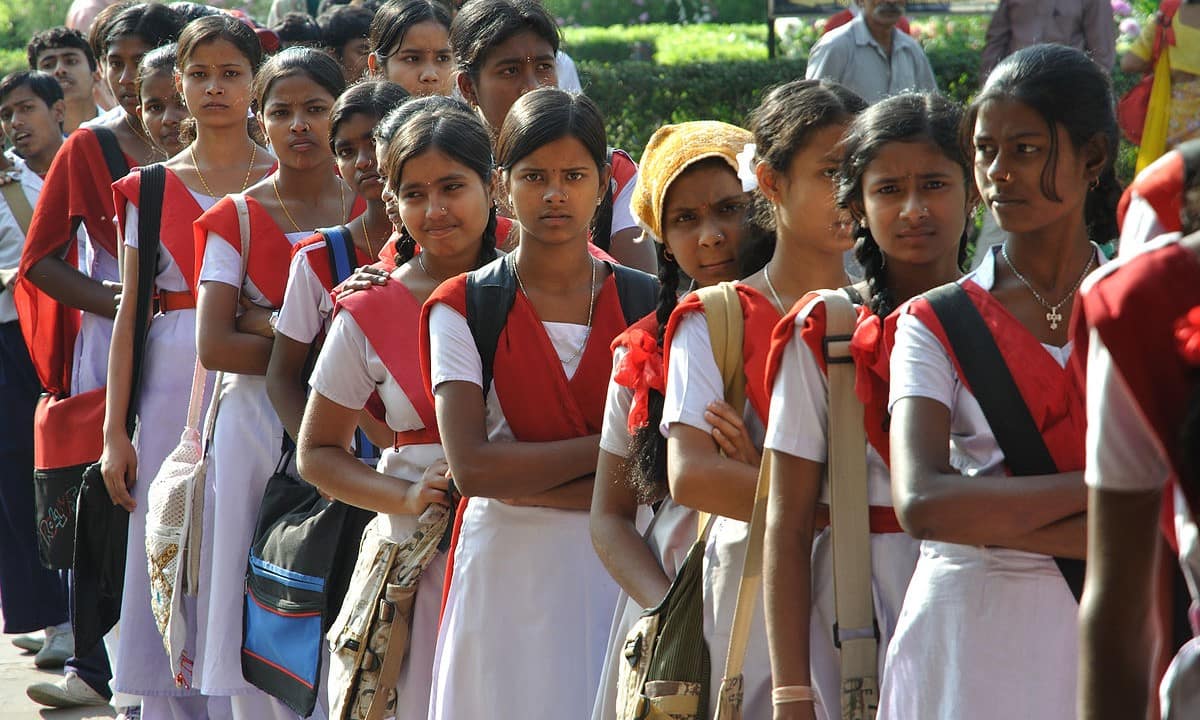
Samagra Shiksha Abhiyan (SSA), the centre’s overarching programme to support government-run schools, may see a greater shift towards progress-based funding approach, where the release of grants to the states will be contingent on achieving predefined ‘outcomes’. The states may also feel a heightened pressure to find private sources, such as the corporate social responsibility (CSR) money, to plug the funding gaps in their school education systems.
This new direction was deliberated at a recent consultative meeting called by the union education ministry to discuss the third phase of the centrally-sponsored scheme, named Samagra Shiksha 3.0, which will come into effect from 2026-27. The day-long confab had officials from 11 states and union territories, representatives from various ministries as well as education experts in attendance.
While the official statement from the ministry of education mentioned the government’s desire to make SSA “outcome-oriented, globally competitive, rooted in Bharatiyata, and responsive to the diverse needs of students” and the need to “once again entrust schools to society”, it was conspicuously short on specific details about the proposed changes.
Also read NCTE Bridge Course: 67,000 teachers register, but 80% applications still unverified
The possible new direction of SSA, which has been in the works for some time, is aimed at ensuring that the scheme’s objectives are met and private funds are utilised in an effective manner. It also has its sceptics, who fear that it will likely push the schools towards ‘teaching to test', while allowing the state to further reduce its monetary commitment towards basic education.
‘Outcome orientation’ for SSA funding
According to a participant, the central officials at the meeting did point towards some of the new priorities. Explaining the ‘outcome-oriented’ emphasis, the participant said, “The funds will be released depending on the progress made.” The specific achievement parameters for measuring the progress, though, weren’t outlined at the event.
The government authorities also highlighted the need to engage with private donors and citizens to improve public schools. A government school in Maharashtra’s Pune district, the Wablewadi Zilla Parishad (ZP) School, was hailed as an example of successful community engagement and tapping into CSR funds. The school, which received global recognition for its innovative learning methods, was transformed with the help of villagers, who donated their land, and non-governmental organisations. It was able to receive financial aid from organisations such as the Bank of New York and Art of Living.
Education schemes and outcomes
The push for outcome-based governance approach as well as the involvement of private players in education sectors has intensified over the past several years. The NITI Aayog, the centre’s policy think tank, in its India: Three Year Action Agenda 2017-18 to 2019-20 report, had advocated moving from an inputs-based to output-based regulatory regime for school education, claiming that the former has resulted in deterioration of public education in the country. It also provided for public private partnership (PPP) models, where private players can adopt government schools.
Presently SSA does offer Key Performance Indicators (KPIs) for its various components, and there exists a provision for incentivising high performing states, adjudged through a Performance Grading Index (PGI), with additional grants. However, outcome-based funding is yet to be the focal point of the scheme’s programmatic and financial norms.
Yet, the centre has withheld SSA funds for three opposition-ruled states, Kerala, West Bengal and Tamil Nadu, for two fiscal years over their reluctance to adopt the centre’s Pradhan Mantri Schools for Rising India (PM SHRI) programme, under which select schools are supported to become exemplar schools on the lines of National Education Policy (NEP) 2020, and incorporate the three-language formula in schooling.
Also read CBSE to schools: Upload pupil-teacher ratio, results, fee data online or face action
On the other hand, the funding for another flagship education programme, the Rashtriya Uchchatar Shiksha Abhiyan (RUSA), and its successor the Pradhan Mantri Uchchatar Shiksha Abhiyan (PM USHA), which support select public higher education institutions, is more explicitly tied to performance and reforms by the states.
In order to boost the involvement of the private sector the education ministry has launched a separate initiative named ‘Vidyanjali’. It allows volunteers to directly connect with the government and government-aided schools to contribute their services, assets, materials and equipment through a dedicated portal.
‘Can’t override RTE Act’
According to Amit Kaushik, a former director of elementary education in the union government, now an education consultant, the outcome-based approach has gained momentum in recent years following the government’s interaction with international development organisations. “SSA’s predecessors, the Sarva Shiksha Abhiyan and the Rashtriya Madhyamik Shiksha Abhiyan, never had this approach. But it’s now being incorporated, not just in education but other sectors as well, as the development agencies require achieving certain results to receive funds. It’s not a bad thing. If money is being given to achieve certain things, be it learning outcomes or kids transitioning to higher classes, those should be achieved,” he said.
However, the former bureaucrat also said that policymakers need to be more circumspect about revising the current system to avoid some of the potential harms, such as schools shifting focus of their teaching to standardised tests rather than a more comprehensive learning, unfair practices aimed at skewing the results and a one-size-fits-all approach to gauge schooling systems operating in diverse socio-geographical contexts. He cited the United States’ (US) ‘No Child Left Behind’ policy – which linked government funding to test results – resulting in public schools tampering with the standardised test results, as an example of the pitfalls of such performance-oriented funding systems.
“I would be very careful about designing it. The easiest way for the states to achieve higher performance ratings is to either teach to test or to cheat. We have anecdotally heard about unfair practices in the National Assessment Survey (NAS) even though it’s so far not used as an incentive for funding. Besides, there are softer aspects to learning not captured by any metrics. And given the diversity of the country, there can’t be a uniform yardstick to measure everyone,” he said. The PARAKH Rashtriya Sarvekshan has replaced NAS.
Kaushik also welcomed the push for utilising CSR funds, but insisted that it shouldn’t allow the governments to abdicate their responsibility of educating children. “The Right to Education (RTE) Act makes the state responsible for providing elementary education. The governments can’t say that since CSR funds haven’t come, we can’t do anything,” he said.
Some, like the former Delhi University professor Anita Rampal, are more scathing about the proposed new direction of Samagra Shiksha.
“We have to recognise that the term 'learning outcomes' focuses on test results of children while it downplays the inputs provided, as stated in NEP. You can’t put the onus of how a system performs on the marks of a child. That’s not what the Right to Education entails. This is a completely neo-liberal rhetoric, which pushes for 'outcomes' through more centralised testing. No executive decision or government scheme can override the RTE Act. The Parliamentary Standing Committee on Education made this point when it asked for details about how many schools had been closed each year, depriving disadvantaged children of their rights through the Samagra Shiksha programme, but that data was not made available by the government,” she said.
She also pointed out how the centre was “arm-twisting” some opposition-ruled states into signing up for PM SHRI exemplar schools by withholding SSA funds already approved for them .“Certain states have complained that they are not getting the money despite performing well. Funding centralised schemes is a constitutional requirement in a federal structure” she said.
Samagra Shiksha and NEP
Among other things, the meeting also discussed integrating SSA with the objectives of NEP, such as vocational education, and emerging technologies, such as Artificial Intelligence (AI). “The meeting largely involved the state representatives sharing their feedback on the scheme. There was nothing concrete from the centre,” said the participant.
In his address to the attendees, union Education Minister Dharmendra Pradhan did mention learning gaps, reducing dropouts, improving learning and nutrition outcomes, strengthening teacher capacity, fostering critical skills, and “moving the Amrit Peedhi beyond the Macaulay mindset” as his priorities. Sanjay Kumar, the school education secretary, said that the need to improve learning outcomes is one of the primary drivers of school education. He also emphasised on curriculum equivalence across different state boards.
 Add as a preferred source on google
Follow us for the latest education news on colleges and universities, admission, courses, exams, research, education policies, study abroad and more..
To get in touch, write to us at news@careers360.com.
Next Story
]Latest Education News
]Related News
]Maharashtra resident doctors to go on indefinite strike from Aug 5
Bengal: ISI faculty, students urge Centre not to proceed with proposed Bill without talks
MoSPI tables Indian Statistical Institute Bill as ISI Kolkata teachers, students protest over autonomy concern


