
Supreme Court frames 4 questions of law on pleas challenging UGC Equity Regulations 2026
Press Trust of India | January 30, 2026 | 09:32 AM IST | 3 mins read
The Supreme Court put the UGC equity regulations 2026 on hold, saying that they are “vague and dangerous” and could have harmful social consequences.
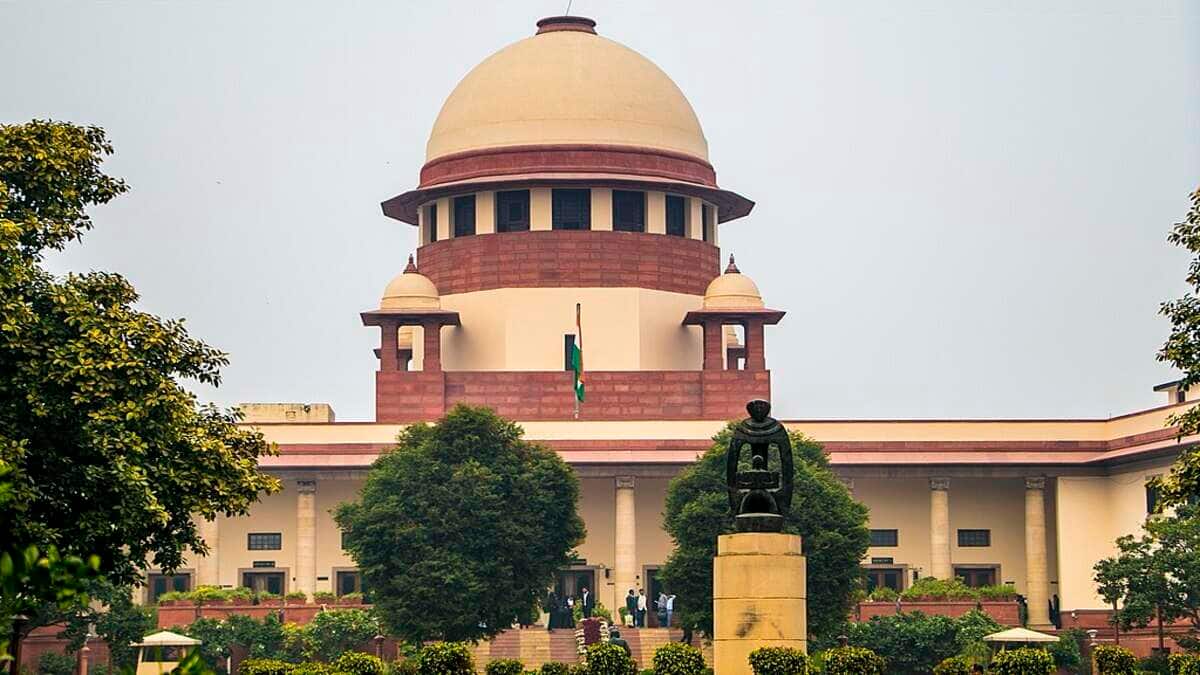
NEW DELHI: The Supreme Court on Thursday said petitions challenging the University Grants Commission (Promotion of Equity in Higher Education Institutions) Regulations, 2026, raise substantial questions of law and framed four such questions for consideration.
The court stayed the recent UGC equity regulations on preventing caste-based discrimination on campuses, saying the framework is "prima facie vague", can have "very sweeping consequences" and may end up dividing the society with a "dangerous impact".
A bench of Chief Justice Surya Kant and Justice Joymalya Baghchi observed that the regulations suffer from "certain ambiguities" and that "the possibility of their misuse cannot be ruled out".
SC's 4 questions on UGC equity regulations
The top court said it was of the prima facie view that the following four substantial questions of law arise for consideration and would require a detailed examination:
Whether the incorporation of clause 3(c) in the impugned regulations, defining "caste-based discrimination", bears a reasonable and rational nexus to subserve the object and purpose of the 2026 UGC regulations, particularly in light of the fact that no distinct or special procedural mechanism has been prescribed to address caste-based discrimination, as opposed to the exhaustive and inclusive definition of "discrimination" provided under clause 3(e) of the impugned regulations? '
Whether the introduction and operationalisation of "caste-based discrimination" under the impugned regulations would have any bearing on the existing constitutional and statutory sub-classification of the Most Backward Castes within the Scheduled Castes (SCs), Scheduled Tribes (STs) and Other Backward Classes (OBC), and whether the impugned regulations provide adequate and effective protection and safeguards to such Extremely Backward Castes against discrimination and structural disadvantage?
Whether the inclusion of the expression "segregation" in clause 7(d) of the impugned regulations, in the context of allocation of hostels, classrooms, mentorship groups or similar academic or residential arrangements, albeit on transparent and non-discriminatory criteria, would amount to a "separate yet equal" classification, thereby infringing the constitutional guarantees of equality and fraternity under Articles 14, 15 as well as the Preamble to the Constitution of India?
Whether the omission of the term "ragging" as a specific form of discrimination in the framework of the impugned regulations, despite its existence in the University Grants Commission (Promotion of Equity in Higher Education Institutions) Regulations, 2012, constitutes a regressive and exclusionary legislative omission? If so, whether such omission is violative of unequal treatment of victims of discrimination by creating an asymmetry in access to justice and thus, falls foul of Articles 14 and 21 of the Constitution of India?
Also read What are UGC Equity Regulations 2026 and why are they facing ‘general-category’ backlash?
Next SC hearing on March 19
A three-judge bench of the apex court will hear the matter on March 19.
The new regulations, mandating all higher education institutions to form "equity committees" to look into complaints of discrimination and promote equity, were notified on January 13. The University Grants Commission (Promotion of Equity in Higher Education Institutions) Regulations, 2026, mandated that these committees must include members of the OBC, SC and ST communities, persons with disabilities and women.
The new regulations replace the UGC (Promotion of Equity in Higher Educational Institutions) Regulations, 2012, which were largely advisory in nature. The pleas have assailed the regulations on the ground that caste-based discrimination has strictly been defined as discrimination against members of the SC, ST and OBC communities.
 Add as a preferred source on google
Follow us for the latest education news on colleges and universities, admission, courses, exams, research, education policies, study abroad and more..
To get in touch, write to us at news@careers360.com.
Next Story
]Economic Survey 2026 suggests simpler devices, screen-limits, phone-free zones to tackle digital addiction
The Economic Survey warns that excessive screen use among children and youth, along with weakening face-to-face connections in schools and colleges, is harming mental health in India, urging policy action, digital safety measures and stronger social support systems.
Aatif AmmadLatest Education News
]Related News
]IIM Calcutta signs pact with FPSB India for financial planning programme
Tamil Nadu: Include UGC nominee in search committees or defer VC appointment, says Governor


