
This WBNUJS graduate’s platform helps over 600 LLB students from regional law schools land internships, jobs
Sheena Sachdeva | January 20, 2026 | 05:34 PM IST | 6 mins read
Platform launched by WBNUJS alumnus trains BA, BBA LLB students in NLU-grade skills. TNDALU, SDM Law College, and even CNLU students benefit
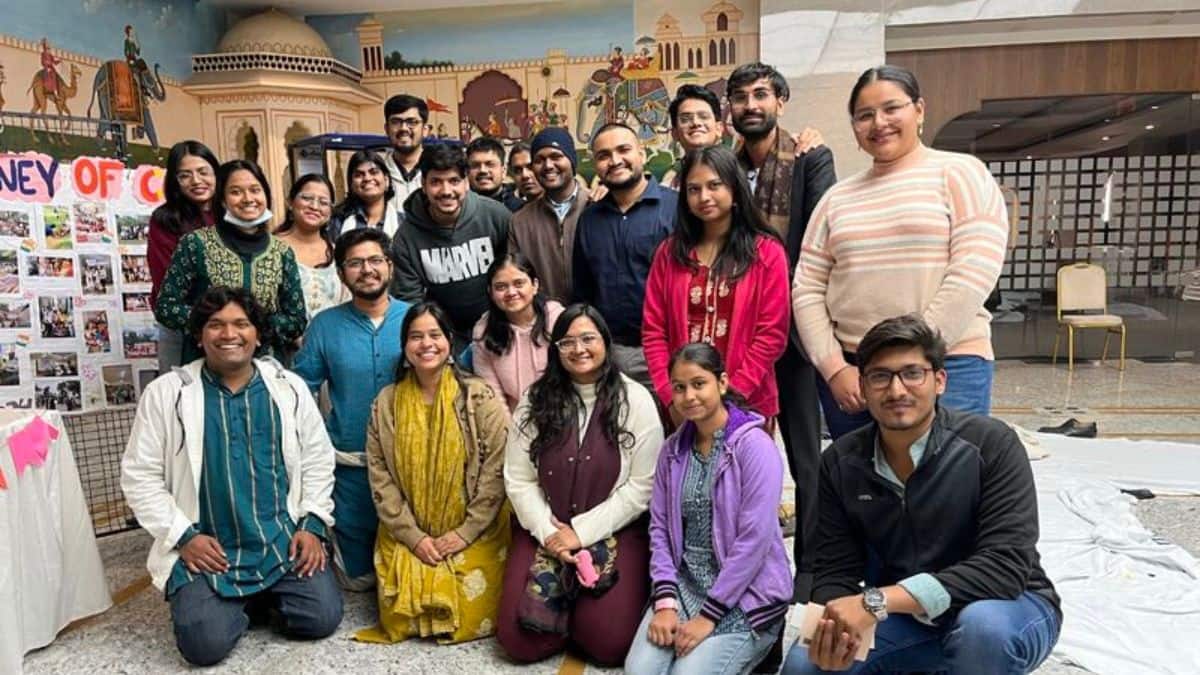
Three years into BA LLB Hons at Tamil Nadu Dr Ambedkar Law University’s (TNDALU) School of Excellence in Law, Sneha Rajesh was struggling to find the right path for herself. A first-generation lawyer, she had no one to guide her or even help her understand how corporate and litigation careers may differ. A mentorship platform for law students, and run by other students, stepped in to lend clarity and guidance.
Law Firm Ready helped Rajesh close the gap between where her academic training had left her and the skills required for professional life. Its mentorship and guidance were key to her landing PRS Legislative’s prestigious LAMP Fellowship, where young graduates work with members of parliament and assist with legislative work. Having graduated in 2025, she also mentors young students at LFR.
“I had no one to guide me on how to get a job in a corporate law firm, which is considered the best job for any law graduate,” said Rajesh, explaining why she joined LFR In 2023. The platform has helped connect hundreds of law students and graduates with law firms and policy and research bodies, and has provided guidance and mentorship.
Law Firm Ready was started by a West Bengal National University of Juridical Sciences (WBNUJS) alumnus, Rohit Sharma, within one year of graduating in 2020.
“During law school, I saw how people from similar socio-economic backgrounds performed similarly in academics, co-curricular activities and career opportunities. I understood that the fact I’m able to make it to NUJS means I need to use my knowledge and network for people belonging to less-privileged communities. That was the time I started building LFR which involved people from regional law schools of India,” he said. It launched in 2021 as a volunteer-led initiative. So far, LFR has trained over 10,000 students from more than 700 law universities.
Also read The Bar Council of India problem: Why legal education needs reform at the top
NUJS Startup: Becoming industry-relevant
Sharma noticed that while many law colleges do teach different specialisations, they don’t train students in industry-relevant critical thinking and research skills. “While subjects like corporate law, tech law and others are taught at law schools, how to get a job or prepare for interviews – usually taught in top National Law Universities – are still not taught in regional colleges,” said Sharma.
LFR aims to equip law graduates with “tools and resources” to launch careers in law. Over the last three years, it has trained over 600 students. The organisation is re-naming itself “All For Law” from 2026.
Legal job-relevant skills
Not just regional law schools, students of newer NLUs have also benefitted from LFR’s interventions.
A 2023 graduate of Chanakya National Law University (CNLU) in Patna, Bihar, recalled struggling to find law internships in the third year of the five-year BBA LLB.
“In my college, there was not much support in terms of placements or internships. Compared to other top NLUs, we had to work hard to get an internship or even a job. Even the seniors or alumni of our college were difficult to approach,” she added. LFR’s support not only helped her land an internship, it also helped her convert it into a full-time job.
Sharma explained that LFR’s mentorship programme builds basic capacities of law students – writing effective resumes and cover letters, understanding emerging career opportunities in artificial intelligence and legal-tech, research building and incorporating critical thinking. Over 120 mentors participate including associates, partners in top legal firms to policy researchers participate and support the initiative.
“We pair law students with experienced legal professionals from diverse fields, including litigation, alternative dispute resolution, tech policy, climate change, and public policy to help students understand their interests deeply,” said Himani Baid, chief design officer at LFR and a law graduate from Amity University, Raipur Chhattisgarh.
Also read Law schools slowly relax attendance rules as LLB students seek internships, flexible learning
Bridging regional law schools
Safah Mohammad, a final-year law student at SDM Law College, Mangalore, who also leads pedagogy at LFR, said that the initiative bridges the gap between regional colleges and the wider knowledge pool to which the NLUs have access.
The LFR programme is for third and fourth-year law students; another, called ‘Aspire’, addresses the skilling needs of first and second-year students.
A second-year student of Dr BR Ambedkar National Law University, Sonepat, who has gone through the Aspire programme said it was “a fun way to learn about basics of law – including how to read a bare act and case laws – develop logical reasoning skills, and understand precisely how to navigate law colleges in the initial years”.
The LFR team has developed its own approach to teaching and training and ensures “each session has fun and learning elements”, said Sharma.
Also read Free ‘GP Sir’s Law Classes’ help poor, marginalised students become judges
New legal jobs
Both programmes focus on emerging areas, such as legal tech jobs, which provide new career pathways.
“Mostly, we have seen law firms, litigation or judiciary as career pathways. However, through our programmes, we also apprise our students of the upcoming areas of jobs in law and what training is required to get them,” said Sharma.
As part of that effort, they also focus on building critical thinking. “We noticed that application of mind happens more during crises, since AI has come. We focus on these aspects deeply and have developed our own curriculum, which makes us different,” he said.
Also read Litigation to corporate law: A first-generation lawyer's journey from burnout to breakthrough
NUJS Startup: Making changes
By 2024, as many 14 cohorts had passed through LFR’s mentorship programme. The core team realised they needed to pay the student mentors and also ensure accountability from those who sought guidance.
“By 2024, we had trained around 6,000 students in critical thinking, problem solving and research skills and helped them in interviews and securing jobs,” said Sharma.
“Even with many mentors from top law schools in India and abroad – such as Harvard and Oxford Universities – and top law firms in India, many students were ghosting their mentors. Hence, from the last two batches, we have added a small fee for all our programmes, within the range of Rs 1,500- Rs 5,000. We are still in the process of finalising the fee.” The peer-led initiative was registered as a full-fledged organisation in 2024.
However, Mohammad added that many students in every cohort receive scholarships so that students from marginalised backgrounds are included. “Our main goal is to develop accessible and affordable programmes. We provide scholarships to students and have partnered with many organisations who work with marginalised students, like Increasing Diversity for Increasing Access (IDIA), the National Law Scholars programme under Bharat Navodaya Abhiyan (BNA) and Navodaya Vidyalaya Samiti (NVS), under the Ministry of Education, programme and others,” said Sharma.
Also read DNLU VC: ‘LLB students staying back for LLM is good sign for a university our age’
Finding purpose
Sharma said that law colleges are not addressing the issue of developing industry-relevant skills
“One of the basic things lacking in law colleges is that no one is teaching how to develop critical and problem-solving skills. No one is teaching the fundamentals of public speaking or research. Our programmes help students to develop curiosity and find their purpose and interests,” he said.
Mohammad added that many students start struggling due to lack of guidance and support structures, leading to poor performance. “We believe that if students get the right tools, skills and equipment in the initial years, they will be able to build confidence for themselves,” she said.
“Otherwise, due to the competition, many fizzle out. We wanted to avoid that by making sure students realise that they have skills and are capable and just require the right mentorship and guidance.”
 Add as a preferred source on google
Follow us for the latest education news on colleges and universities, admission, courses, exams, research, education policies, study abroad and more..
To get in touch, write to us at news@careers360.com.
Next Story
]Latest Education News
]Related News
]MCC NEET Counselling 2026 LIVE: Registration for MBBS, BDS AIQ quota seats at mcc.nic.in from tomorrow
Maharashtra Private Medical College Fee Revision: SMBT MBBS fee cut by Rs 81,500, others see hikes
Tamil Nadu CM unveils Rs 274.46 crore higher education infrastructure projects


