
The Bar Council of India problem: Why legal education needs reform at the top
Shradha Chettri | January 19, 2026 | 12:24 PM IST | 8 mins read
BCI prescriptions can be a straitjacket for law schools that no longer produce just lawyers, but build legal expertise for a range of professions. Many suggest reform
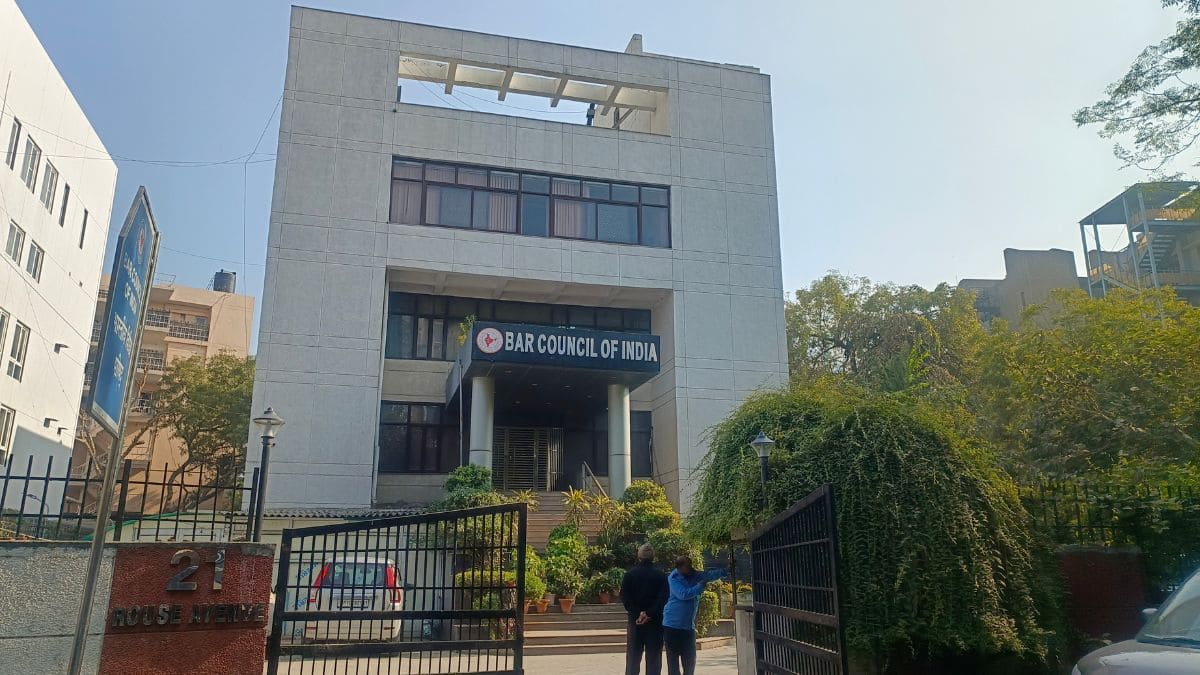
“BCI has to take care of its own responsibility…look at the number of lawyers we have in our country. You want global recognition of lawyers. Focus on that instead of inspecting law colleges,” said Justice Surya Kant, now the Chief Justice of India, while hearing a case in April 2025.
This wasn’t the first time a court was rapping the Bar Council of India (BCI), the body responsible for regulating legal education. Questions have been raised about its role and powers for years.
From the 2005 National Knowledge Commission to a parliamentary standing committee in 2024, multiple bodies have critically examined the BCI’s functioning and recommended reforms. The parliament panel headed by the late BJP MP Sushil Kumar Modi had said in its report, “The committee recommends that the BCI's powers to regulate legal education should be limited to the extent of acquiring basic eligibility for practicing at the bar.”
Now, even teachers and advocates highlight the need to revamp the BCI to meet the changing needs of the legal profession. The body is governed mostly by practicising advocates, but there is a general consensus that it needs the inclusion of academics from diverse backgrounds. But BCI has remained resolutely opposed to major changes.
A law professor remarked, “In a globalised world, with advancement of technology, the profession is changing but at BCI, even the leadership has remained stagnant for more than a decade.”
Manan Kumar Mishra was elected chairman of BCI for the seventh consecutive term in March 2025. Mishra is also a Rajya Sabha member nominated by BJP from Bihar. A senior advocate remarked, “I will be very happy if political consideration goes out of professional bodies.”
BCI and regulating legal education
As the 142nd parliamentary standing committee report from 2024 put it, “modern legal education in India began with the establishment of the Government Law College at Bombay in 1855”. The first three modern universities – Calcutta, Madras and Bombay – were also the first to formally introduce law as a subject for teaching.
There was tremendous growth from 1947 to 1960 and law colleges were opened indiscriminately and without enough resources. Standardisation and regulation began with the Advocates Act, 1961, which constituted the BCI.
Also read Law schools slowly relax attendance rules as LLB students seek internships, flexible learning
“In 1962, following BCI orders, all universities imparting legal education changed over from the two-year to the three-year program in law and revised the curriculum as prescribed by the BCI,” the panel report noted.
In 2008, it framed the “Rules of Legal Education” and by 2010, formed the Curriculum Development Committee. Now, BCI oversees about 1,700 law colleges in India.
BCI Powers: Law and amendment
Within legal education, there’s a growing demand for change.
“The Advocates Act of 1961 essentially said that the BCI will work to promote legal education and lay down standards of such education in consultation with universities and state bar councils. It was also to recognise universities whose degree in law shall be a qualification for enrolment as an advocate. But slowly, BCI took almost an overall control of the legal education space,” said a teacher at a central university’s law department.
Now, without the approval of the BCI, even the University Grants Commission (UGC), the apex regulator for higher education, does not allow universities to start law courses.
Advocate Mohit Yadav, remarked, “Honourable CJI has remarked and recently, there was a judgement of the Bombay High Court questioning the powers of BCI. But BCI’s power to regulate comes from the Advocate Act 1961 and so, ultimately, it falls on the legislature. Changes cannot come in unless the Act is amended.”
The union government had drafted amendments bills for the Advocates Act in 2023 as well as 2025 but both were withdrawn in the face of opposition from BCI and lawyers. The bill had provisions for nominating members to the BCI.
Also read ‘Decision-making at WBNUJS Kolkata was centralised, led to student protest’: VC on restoring trust
Legal Education: Need for central regulator
The parliamentary panel had suggested “an independent authority, the National Council for Legal Education and Research to be established under the proposed Higher Education Commission of India” for legal education at the postgraduate level and beyond.
However, the HECI Bill 2025, now named Viksit Bharat Shiksha Adhisthan Bill, does not place legal and medical education within the ambit of the new regulator it proposes to set up.
The National Council for Legal Education and Research (NCLER) had been proposed by legal educationists who had appeared before the panel.
C Raj Kumar, law professor and founding vice-chancellor of OP Jindal Global University, had said to the parliamentary panel, “The BCI should consider establishing the NCLER with adequate representation from all stakeholders in legal education and the legal profession. Such a council could be chaired by the Chief Justice of India with the BCI Chairman as its member-secretary. The council should have all stakeholders, including legal academia, judges, lawyers from both the litigating and corporate bar as well as academics from humanities and social sciences.”
Faizan Mustafa, former vice-chancellor of NALSAR Hyderabad and present VC of Chanakya National Law University, had even suggested a separate commission, like the Medical Commission of India.
Also read CLAT exam, NLU admission costs are ‘a barrier’ to studying law: Students
Yadav added, “There is a need for revamp of the old structure. BCI is not equipped with the ability to provide professional training and cover all aspects of education. They all are practising advocates and now the ecosystem of law is changing very fast. When one is studying law they are not only practising or involved in litigation, they are also into corporate law, which has nothing to do with BCI. Plus, the law educators who would be teaching, have nothing to do with litigation.”
However, another advocate, Kartikey Hari Gupta, who practices in a high court, feels there’s a need for a mixed approach.
“It is not bad that BCI has a supervisory function, but everything BCI cannot regulate. There has to be a mixed approach. The legal profession did not start as an academic curriculum. In the Indian legal system as well as the British system, the legal profession started as a matter of apprenticeship. Academics came later. But having BCI in full control will also not help. You will have to have some academic and practical insight as well. Jurisprudential understanding is the basis of law and that will come only from academics,” said Gupta.
Bar Council of India: Inspection powers
The parliamentary panel had also noted the “reckless proliferation of substandard law colleges” and attributed this to BCI’s using its “power to inspect law colleges and grant them recognition”. “Accordingly, the committee is of the view that while granting recognition to new colleges due consideration should be given to quality over quantity,” says the report.
Academics also question the inspection process. Megh Raj, an assistant professor at Delhi University’s Faculty of Law, said, “BCI has two purposes – one is to regulate the legal profession, that is the primary goal, and the subsidiary is to regulate legal education. Now, it is very important to understand, BCI’s main function is getting diluted as it is giving emphasis on legal education. It is not properly functioning as a body to regulate the legal profession. The reason is obvious – in the name of regulating education, BCI is earning money. Many times we have found that BCI is giving permission to colleges which are not compliant with conditions.”
The BCI charges Rs 50,000 as application fee. The inspection or approval fee is Rs 3,00,000 per course for non-honours and Rs 5,00,000 per course for honours. Along with it, there is a Rs 5,00,000 refundable interest-free guarantee fee.
“The constitution of the inspection committee is itself problematic as there is monopoly of the person heading it. Also the BCI does inspections online, is it even humanely possible to check if the institution has complied with the rules and regulations that way?” asked Raj. The five-year integrated law programme in DU was approved following online inspection.
Also read Under NTA, UGC NET a ‘general knowledge test’ – rewards rote learning, not analytical skills
BCI has made some attempts to control the mushrooming of institutions. In 2019, it imposed a three-year moratorium on new law colleges, lifting it in 2021 in response to legal challenges. It reimposed the ban in August, 2025.Teachers feel that implementing the three year moratorium is not going to help improve the legal education standards.
Law Schools: Limited autonomy
It is mandatory for institutions to follow the curriculum set by the BCI. For the three-year LLB, there are 20 compulsory papers and 10 optional papers spread over six semesters.
Raj said, “Not following the compulsory papers will affect the recognition of the degree. So we are not left with much autonomy but to only tweak and bring in choices with the optional papers.”
This leads to occasional conflicts with regulations from other authorities. In 2024, BCI had also objected to the dual and joint degree programmes, saying they can be offered only after approval. However, the UGC has already notified guidelines for universities, as envisaged by the National Education Policy 2020, to promote internationalisation.
The parliamentary panel had also noted that the legal curriculum must also address skill development for diverse legal professions, not just courtroom practice. Yadav pointed out, “The All India Bar Examination (AIBE) question paper this year was very tough, leaving students in a quandary. Why am I saying this? The BCI is trying to increase the standard of the AIBE but there is no sync with the education being provided at law colleges.”
There have already been several rounds of litigation over BCI’s stand on LLM. The one-year LLM programme was introduced in India in 2013 following UGC regulations; it coexisted with the traditional two-year format. In 2021 the BCI abolished the one-year LLM and refused to recognise LLM degrees from foreign universities.
With court cases, in April 2025, BCI stated that it has formed a committee to review and decide whether the two formats of LLM — one-year and two-year—should be considered equivalent for academic and professional purposes.
A teacher at an open university on condition of anonymity, added, “A person doing an LLM will most likely get into academia or other fields, so what role does BCI have in it? The issue with providing a law course in distance mode is similar. Why can’t those who are already working in MNCs or elsewhere study law? Those who already have higher education in relevant fields, why bar them from studying?”
Officials at the Bar Council of India did not respond to queries.
 Add as a preferred source on google
Follow us for the latest education news on colleges and universities, admission, courses, exams, research, education policies, study abroad and more..
To get in touch, write to us at news@careers360.com.
Next Story
]Latest Education News
]Related News
]Maharashtra resident doctors to go on indefinite strike from Aug 5
Bengal: ISI faculty, students urge Centre not to proceed with proposed Bill without talks
MoSPI tables Indian Statistical Institute Bill as ISI Kolkata teachers, students protest over autonomy concern


