
Economic Survey 2026: Upgrade ITI diplomas to degrees to improve jobs, unify apprenticeship schemes
Shradha Chettri | January 30, 2026 | 12:23 PM IST | 4 mins read
Economic Survey 2025-2026 highlights ITIs’ subpar infrastructure; says degree recognition can enhance vocational training prestige; calls for merging NAPS, NATS
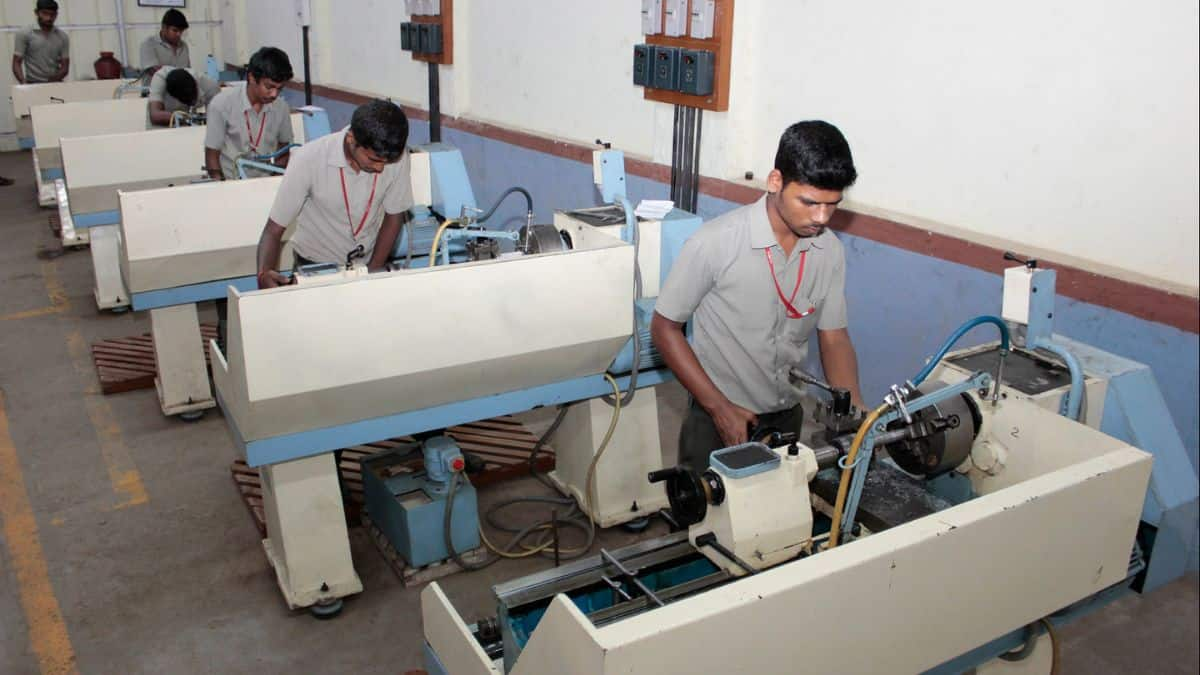
The Economic Survey 2026, presented in parliament on Thursday, asks whether diploma programmes offered in Industrial Training Institutes (ITI) cannot be upgraded into bachelor degrees to improve employability and make vocational pathways more attractive. The survey also stresses on the need to have one unified apprenticeship scheme.
The survey report notes that despite having several schemes aimed at improving the ITIs, there is an “underutilisation of capacity, subpar training quality, faculty capabilities, and infrastructure that fall short of global benchmarks”.
It also cites the example of Odisha and applauds the scheme launched by the state in fixing ITIs.
Also read PMKVY: Missing trainees, 34 lakh unpaid in Skill India scheme, shows CAG report
ITI diplomas to degrees: ‘Enhancing prestige’
The survey presents two arguments in favour of upgrading the ITI diploma. It argues that “degree-equivalent recognition can enhance the reputation and social prestige of vocational tracks in a country where families often equate degrees with status and opportunities”. Second, the change can “enhance academic mobility, enabling lateral entry into higher education, professional certifications or engineering pathways that were previously closed to vocational graduates”.
“For some trainees, this can reduce the perceived risk of choosing a skills-first route,” added the survey.
The ITI diploma upgrade is one of the measures proposed to “make skilling work for upskilling and employability” but the Economic Survey notes that numerous lacunae persist in every part of the the skill development system despite multiple schemes and initiatives floated to fix them. Together, these have led to “limited employability and entrepreneurial preparedness among most trainees”.
In the 2025-26 budget the government had announced the National Scheme for Upgradation of 1,000 government ITIs, including 200 hub ITIs and 800 spoke ITIs.
The India Economic Survey speaks favourably of Odisha’s effort to revamp ITIs. As per the survey, Odisha started its skill transformation with the establishment of the Odisha Skill Development Authority (OSDA) in 2016.
“The mission of the OSDA was to ‘Skill in Odisha’. For that, it followed a simple strategy, ‘Fix, Accelerate, Scale.’ The idea was to ‘fix’ the ITIs, ‘scale’ the short-term training programmes and ‘accelerate’ the setting up of advanced training institutes. At the core of this strategy was converging ongoing skill initiatives across departments, ensuring quality standards, and developing market-responsive training, inclusivity, and scalability.” the survey added.
The programme sought to build confidence in the system by highlighting alumni success, changing uniforms, organising festivals and global exposure. Skill development schemes were scaled up and alumni deployed to raise awareness. “Urban events were organised to celebrate skilled workers and shift social perceptions about vocational training,” the report adds. Finally, the state established the Odisha World Skill Centre in 2021, a “world-class training institute” in collaboration with Singapore’s Institute of Technical Education - Education Services (ITEES) and leveraged that to train teachers and establish industry partnerships.
Unified apprenticeship scheme
At present, there are two schemes that support professional apprenticeship – the National Apprenticeship Promotion Scheme (NAPS) and National Apprenticeship Training Scheme (NATS). NAPS is under the ministry of skill development and entrepreneurship (MSDE) and NATS under ministry of education.
“The presence of multiple overlapping programmes, makes it difficult for industry players to navigate the different processes and portals, resulting in a compliance burden. Regional disparities also persist in candidate registrations across states. While Maharashtra and Uttar Pradesh report over 10 lakh registered apprentices each, many North-Eastern states have only a few hundred to a few thousand registrations,” the survey adds.
It states that one unified scheme will ensure better policy alignment and closer integration between education, skilling, and employment.
The survey also stresses on the need for expansion of the scheme into new-age and gig economy sectors, including green manufacturing, logistics, and digital services, to meet emerging industry demands.
Also read PMKVY 4.0: Kaushal Kendras train just 17,328 in 7 months, zero enrolment in many states
Skill India: Jobs, salaries, retention
Importantly, the Economic Survey also says that a learner’s post-training trajectory must also be mapped. Currently, the skilling schemes merely count enrolments and certifications.
“It should move towards assessing whether skilling programmes generate sustained labour-market value in terms of employability, earnings, and job retention. Critically, evaluation should follow the trainee’s post-training trajectory rather than the administrative cycle of the scheme,” the survey added.
It also expressed concern that the third-party assessments of flagship schemes, such as Prime Minister Kaushal Vikas Yojana (PMKVY), Jan Shiksha Sansthan, ITIs, and NAPS were undertaken over five years ago, in 2020-21.
“Given rapid technological change and evolving local labour-market demand, a fresh and outcome-oriented reassessment, anchored in medium-term employment and earnings outcomes,” the survey added.
However, in schemes like Pradhan Mantri Kaushal Vikas Yojana (PMKVY 4.0) – a key scheme under the broader Skill India Mission – the MSDE has stopped tracking placement.
On PMKVY, the survey observes, “PMKVY faces significant implementation challenges, including inconsistencies in beneficiary and data management, delays in disbursing funds, gaps in monitoring systems, and low placement outcomes.”
 Add as a preferred source on google
Follow us for the latest education news on colleges and universities, admission, courses, exams, research, education policies, study abroad and more..
To get in touch, write to us at news@careers360.com.
Next Story
]Latest Education News
]Related News
]DU Placements 2026: Applications open for jobs, internships at placement.du.ac.in for UG, PG students
'Sorry papa, I tried': Kanpur scholar dies by suicide; note cites failed attempts to secure government job


