
‘No one wants to speak up’: IIT Ropar PhD student faces smear campaign after reporting assault by professor
Sheena Sachdeva | May 4, 2026 | 03:43 PM IST | 3 mins read
IIT Ropar professor placed on forced leave, not suspended; PhD student asked to remove social media posts; ‘threats of academic consequences’ keep victims from speaking out
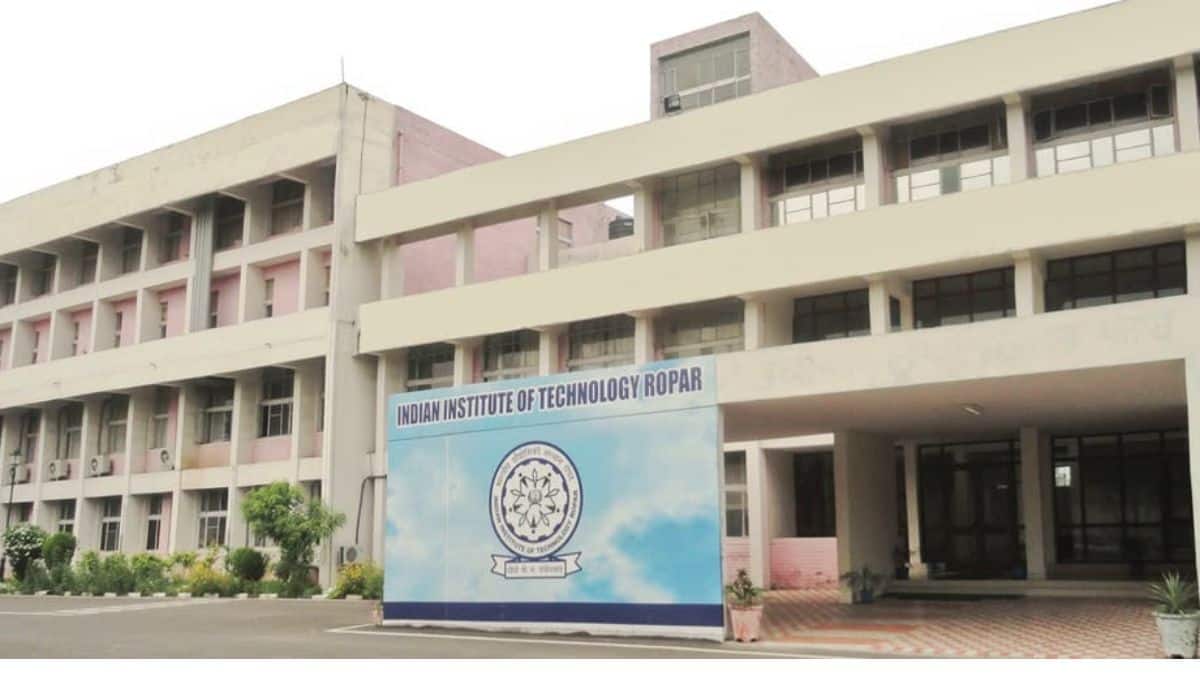
A first-year PhD student from the physics department of Indian Institute of Technology (IIT) Ropar has alleged “mental torture and sexual assault” by her supervisor, and says she is now being subjected to a smear campaign on campus and online – even as the institute has taken only limited action against the accused faculty member.
In a social media post dated May 1, the PhD student wrote: “One (the supervisor) professor has beaten me and punched me in my left eye many times when I tried to stop him from doing physical assault and molestation.” The alleged incident took place around 4 pm on April 28.
The incident came to light after the PhD student reached out to the larger community of researchers on “collapse of the academic boundaries”. In a pdf of her communication with the supervisor from August till October 2025, she had shared the interactions and communication from the professor, which substantiates the harassment further.
The student alleged the professor to have misused his professional relationship for sexual interest. And when she retaliated, the professor “weaponised” his academic authority and tried to impact her research. She also alleged that she wasn't allowed to visit the research conference in Japan after she retaliated against the harassment.
IIT Ropar issued a statement on May 2 stating: “The concerned faculty member has been placed on forced leave with immediate effect and necessary arrangements have been made to ensure that the complainant can continue her academic work without any disruption, fear or pressure of any kind.”
However, sources on campus say the IIT response falls short. A former professor from an IIT pointed out that employee service rules allow the director to place a faculty member under suspension pending disciplinary proceedings – a step the institute has not taken. “But in this case this has not happened. Only an informal measure has been taken against the alleged professor,” he said.
IIT Ropar Professor Case: Victim’s character assassination
Multiple sources at IIT Ropar, speaking on condition of anonymity, said the PhD student is now facing a coordinated campaign to discredit her. The student had herself alleged this targeting on her social media posts, which have since been removed. She has deactivated her social media, removed her posts after being asked by the Internal Complaints Committee (ICC).
“While during the ICC meeting held recently, the professor was asked to apologise to the student and her supervisor is changed for now. But in a way she has been threatened to not write further about the incident,” said one of the IIT Ropar employees.
Further, no proper Prevention, Prohibition and Redressal Act (POSH) related workshops have been conducted. “All these workshops are just for namesake. No information about the rights of students has been given. Where must the report be made, what is the procedure – nothing has been shared with the students,” said an employee.
IIT Ropar: Not a lone case, say employees
One of the admin employees said that such instances are rampant on the IIT Ropar campus. “Different students have had similar experiences with different professors. And students are afraid to speak up – they are threatened with suspension of their PhDs. PhD admissions also lack transparency,” stated an employee who did not wish to be named.
“The PhD student is being humiliated on social media. No one wants to speak up,” said another employee. People on campus find the case is not taken seriously, despite all the media coverage. “The institute has suppressed the matter further,” one said.
 Add as a preferred source on google
Follow us for the latest education news on colleges and universities, admission, courses, exams, research, education policies, study abroad and more..
To get in touch, write to us at news@careers360.com.
Next Story
]With CSE surge, these specialised BTech courses are vanishing from engineering colleges
Core BTech courses are hobbled by dated curricula and declining interest, as engineering colleges add more CS and AI branches; ITI technicians, diploma engineers fill the gap but the field needs a new approach, say experts
Musab QaziLatest Education News
]Related News
]MCC NEET Counselling 2026 LIVE: Registration for MBBS, BDS AIQ quota seats at mcc.nic.in from tomorrow
Maharashtra Private Medical College Fee Revision: SMBT MBBS fee cut by Rs 81,500, others see hikes
Tamil Nadu CM unveils Rs 274.46 crore higher education infrastructure projects


