
TN Assembly: School breakfast, scholarships, SSA funds – speech Governor RN Ravi skipped citing poor standards
K. Nitika Shivani | January 20, 2026 | 01:37 PM IST | 4 mins read
Tamil Nadu government draft highlights schemes for school, higher education. It also raises politically-sensitive matters of Hindi-imposition, Samagra Shiksha funds
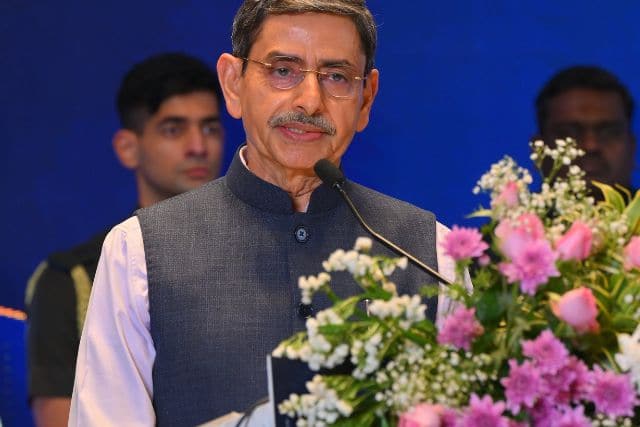
An education agenda spanning a breakfast scheme reaching 19.34 lakh schoolchildren, monthly stipends of Rs.1,000 for more than 12 lakh students, and a 7.5% reservation for government school students in professional courses was outlined in the address prepared by the Tamil Nadu government for delivery by the Governor RN Ravi, to the Tamil Nadu Legislative Assembly today, January 20, 2026. The draft, positioning education as a central pillar of the state government’s welfare and development strategy, also raised concerns over Rs 3,548 crore of union funds owed to the state. Ravi walked out without delivering it.
Placed before the assembly, the address mapped state investments across school nutrition, learning recovery, infrastructure upgrades and higher education access, while reaffirming Tamil Nadu’s opposition to the three-language formula and other centrally prescribed education and language measures.
Ravi left the assembly without delivering the address; the Lok Bhavan later said on social media that the Governor had cited 13 reasons for not reading the speech, highlighting a “steady decline in educational standards and widespread mismanagement in educational institutions affecting youth”. The statement also claimed that nearly 50% of faculty positions have remained vacant for years and that guest faculty members are restive.
Also read Governor as Chancellor: Colonial-era role being used to 'choke' universities in opposition states
School Education: Nutrition, learning, infrastructure
The Chief Minister’s Breakfast Scheme, described in the address as the first such initiative in India, currently benefits 19.34 lakh children studying in government and government-aided schools. The scheme has been expanded to urban government-aided schools and, according to findings cited from the State Planning Commission, has led to improved nutritional intake, better attendance and enhanced learning outcomes.
To address learning gaps and prevent dropouts following the pandemic, the government implemented Illam Thedi Kalvi, a volunteer-driven doorstep education programme, along with Ennum Ezhuthum, aimed at strengthening foundational literacy and numeracy among students in Classes 1 to 5. A reading campaign has also been undertaken to improve reading habits among schoolchildren.
Under the Perasiriyar Anbazhagan School Improvement Scheme, government schools have been upgraded with improved classrooms, laboratories and information technology facilities. Over the last five years, Rs 1,359 crore has been spent on constructing 4,247 new school buildings, while Rs 678 crore has been allocated for rejuvenation works in existing schools.
Additional measures mentioned in the address include the establishment of schools of excellence, introduction of high-tech laboratories, smart classrooms, vocational education reforms, art festivals and the distribution of tablets to teachers to support classroom instruction.
Girls’ education, scholarships
The Moovalur Ramamirtham Ammaiyar Pudhumai Penn Scheme provides a monthly stipend of Rs 1,000 to girls who studied in government schools from Classes 6 to 9 and are now pursuing undergraduate degrees, diplomas or vocational education. The address noted that the scheme has helped improve enrolment and retention, contributing to Tamil Nadu recording the highest gross enrolment ratio in the country.
In addition, the Pudhumai Penn and Thamizh Pudhalvan schemes together extend a monthly assistance of Rs1,000 to students pursuing higher education. The government has so far spent Rs1,831 crore on these schemes, benefiting more than 12 lakh students.
Professional and higher education
The address highlighted the 7.5% internal reservation for students from government schools in undergraduate professional courses, under which the state bears tuition fees, hostel expenses and transport costs. Over the past five years, Rs 703 crore has been allocated under this initiative, benefiting 36,419 students.
Infrastructure development in government engineering, arts and science, and polytechnic colleges has been undertaken through the Perunthalaivar Kamarajar College Development Scheme, with Rs 909 crore spent over four years. The state has also established 36 new arts and science colleges during the past five years.
To equip students with digital skills and exposure to emerging technologies, the government is distributing laptops to 10 lakh students enrolled in arts, science, engineering, agriculture and medical courses during the current academic year. The programme involves an expenditure of Rs 2,172 crore.
Overseas scholarships, community learning
The Annal Ambedkar Overseas Scholarship for Higher Education Scheme has been expanded, with the scholarship amount increased to Rs 36 lakh per student. While only six students benefited from the scheme between 2003 and 2021, since 2021 the government has disbursed Rs 162 crore to 385 Adi Dravidar and Tribal students pursuing higher education abroad.
The address also announced the establishment of 246 Village Knowledge Centres in Adi Dravidar habitations, equipped with essential facilities to support learning and skill development at the community level.
Funding concerns and language policy
The Governor’s address flagged delays in the release of central funds under the Samagra Shiksha scheme, noting that Rs 3,548 crore approved by the Project Approval Board has not been released, compelling the state government to bear the full cost of implementation.
Reiterating its two-language policy, the government opposed the three-language formula proposed in the National Education Policy and cited the unanimous 2022 Assembly resolution urging the union government not to implement the recommendations of the Parliamentary Committee on Official Language. The address also opposed a recent University Grants Commission circular mandating a third language in higher educational institutions, terming it an indirect imposition of Hindi.
The address referred to the “Tell Us Your Dream” initiative, under which feedback is being collected from households across the State to shape welfare policies, including education, in line with Tamil Nadu’s development goals for 2030.
 Add as a preferred source on google
Follow us for the latest education news on colleges and universities, admission, courses, exams, research, education policies, study abroad and more..
To get in touch, write to us at news@careers360.com.
Next Story
]The Bar Council of India problem: Why legal education needs reform at the top
Bar Council of India’s prescriptions can be a straitjacket for law schools that no longer produce just lawyers, but build legal expertise for a range of professions. Academics, parliament panels, even courts suggest reform
Shradha ChettriLatest Education News
]Related News
]Maharashtra resident doctors to go on indefinite strike from Aug 5
Bengal: ISI faculty, students urge Centre not to proceed with proposed Bill without talks
MoSPI tables Indian Statistical Institute Bill as ISI Kolkata teachers, students protest over autonomy concern


